
Why Refresh Rate Matters for Perceived Smoothness
You’ll get a primer on what refresh rate is and why it shows up in TV specs. Refresh rate, measured in Hz, defines how many times a display updates per second and sets temporal resolution.
You’ll learn what 60Hz and 120Hz mean, how human perception compares to measured performance, and when higher Hz truly helps. We’ll cover content sources and compatibility, the role of display tech and motion processing, plus a buying guide to match refresh rate to your gear.
By the end you’ll know if your TV is holding back smoothness.
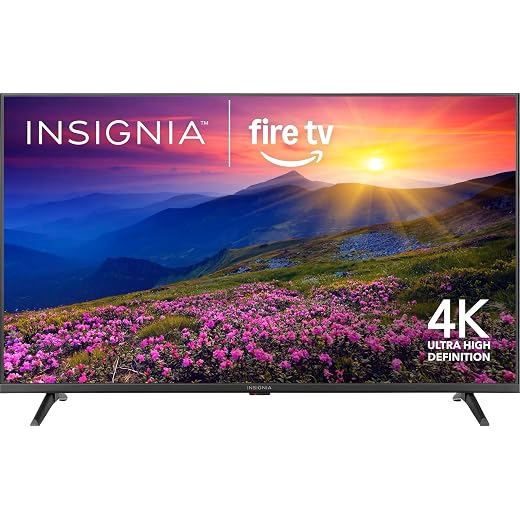
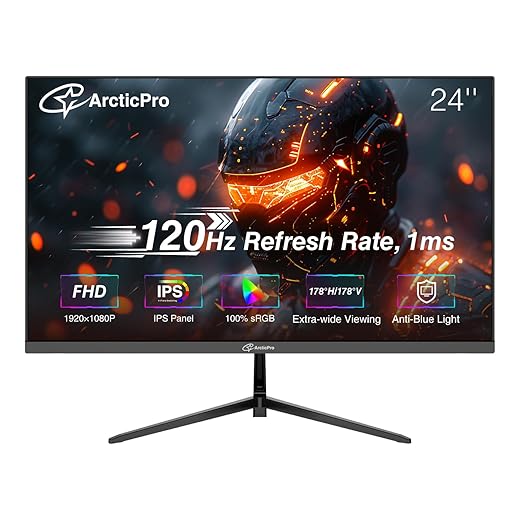
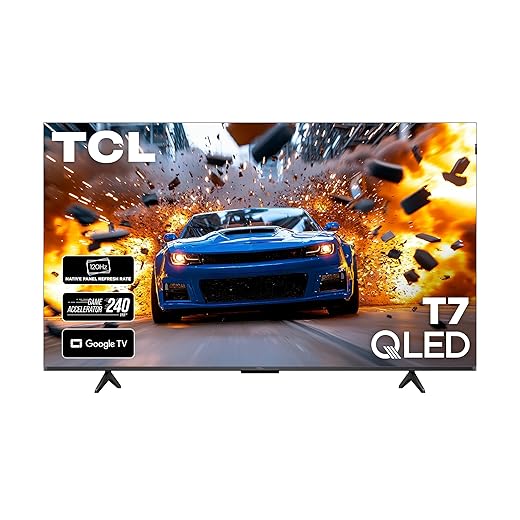

Understanding Refresh Rate: What 60Hz and 120Hz Actually Mean
Refresh rate vs. frame rate — the technical split
Refresh rate (Hz) is how many times your screen updates per second. Frame rate (fps) is how many unique images the source supplies per second. They’re related but not the same: a 60Hz TV can show a 60 fps signal one‑to‑one, but it can also show a 24 fps movie by repeating frames to fill 60 updates. That repetition pattern — not the raw Hz number — often determines perceived smoothness.
Temporal resolution and display behavior
Think of temporal resolution as how finely the display samples time. Two key realities:
- Sample‑and‑hold displays (most LCDs) hold each frame on-screen until the next refresh; your eye tracks moving objects across that static image, producing motion blur.
- Impulse‑type behavior (old CRTs, or modern displays using black‑frame insertion/backlight strobing) flashes each frame briefly, reducing tracking blur and making motion look crisper.
So a “120Hz” spec alone doesn’t guarantee crisp motion; how the panel presents each refresh matters.
Why multiples and timing matter
Smoothness improves when refresh is an integer multiple of the source fps. Examples you can test at home:
- 24 fps film on 60Hz -> 60/24 = 2.5, so frames are repeated in an uneven cadence (e.g., a 3:2 pattern). That produces the classic movie judder.
- 24 fps on 120Hz -> 120/24 = 5, so each frame can be repeated evenly (5 times) and the cadence disappears.
- 30 -> 60 and 60 -> 120 are clean 2× multipliers and avoid uneven repeats.
Frame pacing, stutter and practical tips
Stutter often comes from uneven frame delivery (poor frame pacing) or from the TV inserting/interpolating frames unevenly. To reduce problems:
- Match your source to a multiple of the display when possible (enable 24p/film mode for Blu‑ray/streamed movies).
- Use game mode or VRR for gaming to avoid frame‑to‑refresh mismatches and added processing latency.
- Try backlight strobing or BFI if motion blur is your main complaint — but test for flicker and reduced brightness.
You’ll see how these mechanics play out in real viewing scenarios as we dig into perceived smoothness and content sources next.
Perceived Smoothness vs Measured Performance: What Your Eyes Actually Notice
How your brain interprets motion
Your visual system isn’t a camera — it’s a sampler with limits. When objects move, your eyes and brain integrate light over short windows (~10–20 ms for fast foveal tracking) and try to stitch discrete frames into continuous motion. That means two things for you: higher temporal resolution (more frames per second) can make motion appear smoother, but only up to the point where the brain no longer perceives differences — the just‑noticeable difference (JND). For many people, the JND between 60Hz and 120Hz shows up clearly in fast motion, less so in slow cinematic pans.
Motion blur vs temporal resolution
Two different effects get lumped together as “smoothness”:
- Temporal resolution (frame/frequency): more distinct sampling instants per second.
- Motion smear (temporal blur from pixel persistence): how long a pixel’s light lingers after an update.
A 120Hz panel that also has low persistence (fast response or strobing/BFI) reduces motion smear and preserves the benefit of higher frame rates. Conversely, a slow‑response 120Hz panel can still look blurred.
Where 120Hz gives you real gains — and where it doesn’t
You’ll notice 120Hz most when motion is rapid or your eyes track moving subjects:
- Clear wins: fast camera pans in sports, quick camera tracking in racing/driving games, competitive shooters with rapid aim changes.
- Marginal returns: slow, deliberate cinematic pans, dialogue scenes, most streaming movies shot at 24 fps (where film cadence dominates perception).
A simple home test: watch a soccer fast‑break or a racing replay. If edges and HUD tracking feel crisper on 120Hz, you’re seeing a real benefit.
Processing artifacts and objective metrics
Upscaling tricks can hurt as much as help. Motion interpolation can create the soap‑opera effect; uneven frame insertion causes judder. Useful objective metrics you can look for:
- Response time: how fast pixels change (ms).
- MPRT (moving picture response time): estimates perceived blur for moving objects.
- Frame insertion/black frame insertion: methods that reduce smear by shortening frame visibility.
Quick, actionable tips
- For gaming, enable game mode and VRR; prioritize low MPRT and fast response times.
- For movies, prefer native 24p passthrough or turn off interpolation to avoid unnatural motion.
- Test real content (sports, games, films) rather than trusting specs alone.
Next up: we’ll map these perceptual realities to the content sources that actually let 120Hz shine — when your TV can make the most of that higher refresh rate.
Content Sources and Compatibility: When 120Hz Actually Gives You a Benefit
Typical frame rates you’ll encounter
Know the common frame rates so you can predict when 120Hz will matter:
- Film/cinema: 24 fps (most movies)
- Broadcast/TV: 25 fps (PAL regions), 30 fps, 50/60 fps for fast sports or TV
- Streaming: variable — many movies are 24 fps, sitcoms and some streaming shows 30/60 fps, sports often 50/60 fps
- Gaming: 30, 60, 120 fps (or higher on PC) depending on hardware and settings
A real example: a 24 fps movie looks mathematically cleaner on 120Hz than on 60Hz because 120 is divisible by 24 (120/24 = 5), avoiding fractional pulldown.
How 60Hz and 120Hz map to sources
When a display and source share an integer relationship (e.g., 24 → 120), you avoid pulldown artifacts. On 60Hz, 24 → 60 creates 3:2 pulldown, which produces subtle judder on slow camera pans. For live sports or anything shot at native 60, both 60Hz and 120Hz can display it cleanly, but 120Hz with low persistence shows crisper motion.
VRR and gaming: where 120Hz is decisive
Variable Refresh Rate (VRR) systems — HDMI 2.1 VRR, AMD FreeSync, NVIDIA G-SYNC — let the TV match its refresh to irregular frame output from a console/PC. That eliminates tearing and stutter without interpolation.
Why gaming at native 120 fps matters:
- Frame time halves: 1/60s = 16.7 ms vs 1/120s = 8.3 ms, so motion updates and input sampling are more frequent.
- Lower average input latency and smoother aim tracking in shooters and racing games.
- VRR gives the best experience when the GPU/console can push frames anywhere between, say, 60–120 fps.
Practical compatibility tips
Bandwidth and connectors are the gatekeepers: 4K@120Hz typically requires HDMI 2.1 or aggressive chroma subsampling over HDMI 2.0. Use quality cables and ensure your source (PS5, Xbox Series X, or PC GPU) advertises 120Hz output at your chosen resolution.
Quick checklist to get 120Hz working:
- Set TV to its native 120Hz/PC/Game mode.
- Use an HDMI 2.1-capable cable and port.
- Confirm your source supports 120 fps at the chosen resolution.
- Enable VRR on both console/PC and TV.
- If needed, trade resolution for frame rate (1440p@120 is often easier than 4K@120).
Next, we’ll look at how display tech and processing choices can preserve—or destroy—these source advantages.
Display Technologies and Processing: How TVs Deliver—or Lose—Smoothness
Panel physics: emissive vs. LCD
How the pixels themselves behave sets a hard ceiling. Emissive panels (OLED, QD‑OLED, microLED) drive luminance directly, so their GtG pixel response times are often sub-1‑ms to a few ms. That means less trailing and naturally crisper motion. LCDs (VA and IPS) rely on liquid crystals and a backlight, so GtG is typically slower and motion blur stems from both pixel response and sample-and-hold persistence.
Real-world tip: if you watch a lot of fast camera pans or high-frame-rate gaming, an OLED like the LG C2/C3 or a QN90B Neo QLED will usually show less smear than many standard VA/IPS LCDs.
Motion-enhancement tools and tradeoffs
Manufacturers layer processing to mask native limits. Know the common tools and what they cost you:
- Motion interpolation (frame interpolation/“MEMC”): creates intermediate frames for smoother motion but can introduce unnatural “soap-opera” rendering, edge warping, and halo artifacts. It also typically adds latency.
- Black-frame insertion (BFI) / backlight strobing: reduces perceived blur by inserting dark frames or strobing the backlight. Great for clarity, but can dim the image and produce perceptible flicker for some viewers.
- Software dejudder algorithms: try to fix 24→60/120 pulldown judder. They’re useful for films but can smear fine detail on motion.

What manufacturers advertise vs. what to trust
Marketing loves roundups: “120Hz panel” is clear, but watch for terms like “240Hz Motion Rate” or “Effective 480Hz” — these usually describe interpolation or backlight tricks, not true native refresh.
Trust measurements, not slogans. Useful numbers to look for:
- Native refresh rate (Hz)
- GtG pixel response (ms)
- MPRT / motion blur reduction effectiveness
- Measured input lag (ms)
- Motion resolution / moving resolution tests (Blur Busters or lab results)
Actionable checklist: enable Game/PC mode to minimize processing when latency matters; turn off interpolation for competitive gaming; try BFI/strobe for console racing or sports if you can tolerate dimming or flicker; consult independent reviews (RTINGS, Blur Busters) for measured GtG, MPRT, and input lag before you buy.
Practical Buying Guide: Choose the Right Refresh Rate for Your Setup
Match the TV to how you use it
Decide first what dominates your viewing hours—your choice should be driven by content, not marketing.
- Movie-centric viewers: If you mostly watch films and streaming TV at 24 fps, a well‑tuned 60Hz TV with good dejudder and low judder processing is often sufficient. Prioritize excellent picture quality, HDR tone mapping, and low noise over raw refresh specs.
- Sports and live-action fans: Fast pans and crowd motion benefit from 120Hz panels or TVs with effective motion handling and BFI options. You’ll notice smoother tracking on live feeds.
- Competitive gamers: If you play fast multiplayer on a PC or next‑gen console, 120Hz (and 4K@120 support) is worth the premium—paired with low input lag and VRR.
- Casual gamers and mixed-use households: A smart compromise is a 120Hz TV with an affordable tier—great for future game compatibility but not strictly necessary if you rarely game at high frame rates.

What to check on the spec sheet
Look past buzzwords; confirm these hard numbers before you buy:
- Native refresh rate (Hz): True 120Hz vs marketing claims.
- VRR support: FreeSync/G-Sync/VRR compatibility to eliminate tearing.
- Max resolution at high refresh: e.g., 4K@120Hz capability.
- HDMI bandwidth/features: HDMI 2.1, FRL, ALLM—needed for 4K120 consoles/PCs.
- Input lag (ms): Measured in Game/PC mode at target resolution/refresh.
- Pixel response / MPRT: lower values reduce perceived smear.
Settings to configure for optimal smoothness
Small tweaks deliver big gains:
- Enable Game/PC mode to cut processing latency.
- Turn on VRR when supported by your source.
- Disable motion interpolation for gaming; consider it for some sports if you prefer smoothness.
- Try BFI/strobe for motion clarity, but watch for dimming or flicker.
Future-proofing, cost/benefit, and verification
If you plan to keep a TV 5+ years, 120Hz + HDMI 2.1 is a sensible hedge. Balance price vs how often you’ll use 120Hz features.
To verify performance: test in-store with fast-panning demo clips, check measured reviews (RTINGS, Blur Busters), and run console/PC tests at target resolutions. These practical checks will tell you whether the spec sheet translates to real-world smoothness.
Transitioning to the final decision: weigh these findings against your viewing priorities and budget before making the call.
Making the Call: Is Your TV Holding Back Smoothness?
Higher refresh rates give real advantages for gaming, fast sports and interactive use, but only if the source, cables and TV processing actually support 120Hz. Match your purchase to primary uses: prioritize low input lag, fast pixel response and VRR over raw Hz numbers.
Verify HDMI bandwidth, console/PC output and native panel capability. If uncertain, test in person or choose a TV with proven benchmarked performance rather than marketing claims today.


