

Are you after gallery-perfect aesthetics with the Samsung Frame 55 or OLED-level contrast and true blacks from the Sony A80J 65 that actually transform your cinematic viewing?
Art or OLED bliss? You’re choosing between a 55-inch Samsung Frame built for aesthetics and a 65-inch Sony A80J OLED tuned for cinema and gaming. This guide covers design, picture engine, smart/gaming features, and buying scenarios to fit your room.
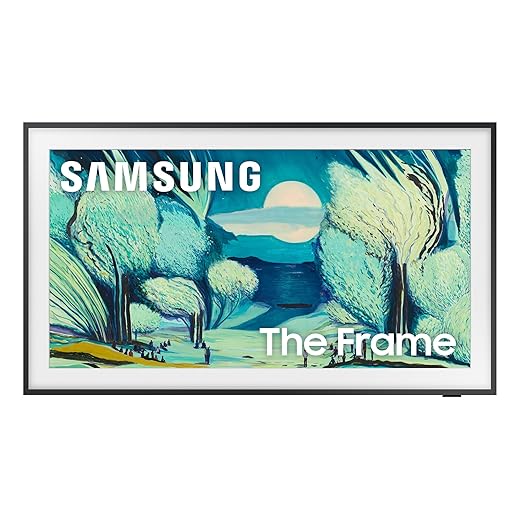
Gallery Display
8.1
You’re buying a display that prioritizes design and art-first functionality while still delivering strong daytime brightness and gaming chops. If your priority is a TV that doubles as a framed artwork and performs well in bright rooms and gaming, this model is a compelling choice.
Cinematic OLED
8.8
You’ll get class-leading contrast and cinematic fidelity that benefits movies and console gaming, backed by robust BRAVIA processing. If deep blacks, accurate color, and a sound‑from‑screen experience are your priorities, this OLED earns that recommendation.
Samsung Frame LS03F
- Picture Quality – 8
- Design & Aesthetics – 9.5
- Smart Features & UI – 7
- Gaming Performance – 9
- Sound – 7
Sony XR8B OLED
- Picture Quality – 9.5
- Design & Aesthetics – 8.5
- Smart Features & UI – 8.5
- Gaming Performance – 9
- Sound – 8.5
Samsung Frame LS03F
Pros
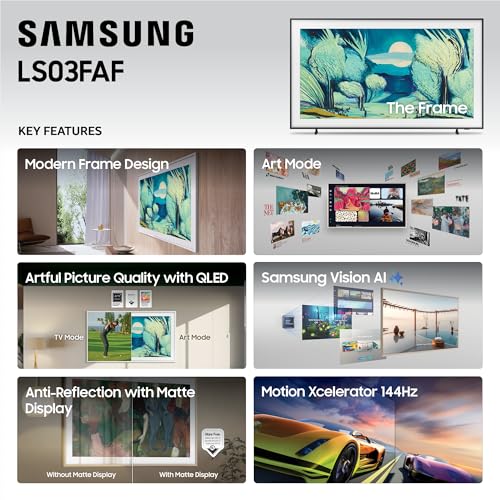
- You get a true gallery-style matte Art Mode and customizable bezels for a framed look on the wall
- Slim, wall-focused design with an external One Connect-style hub to minimize visible cabling
- High refresh-rate gaming capability (supporting up to 4K/144Hz and VRR) ideal for PC/console gamers
- Strong color reproduction driven by Samsung Vision AI and QLED tech for bright-room viewing
Sony XR8B OLED
Pros
- You get OLED-level perfect blacks and contrast with excellent detail rendition
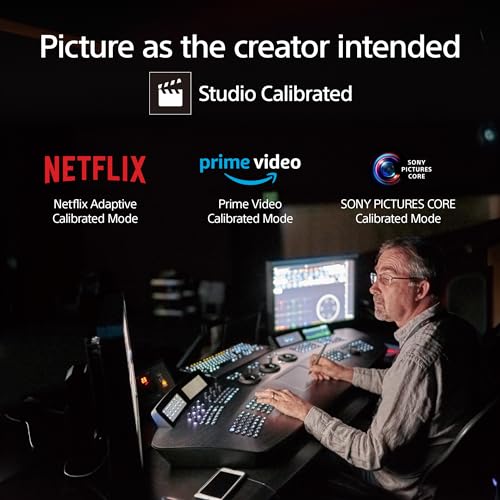
- BRAVIA XR processing and studio-calibrated modes deliver highly accurate, filmic picture quality
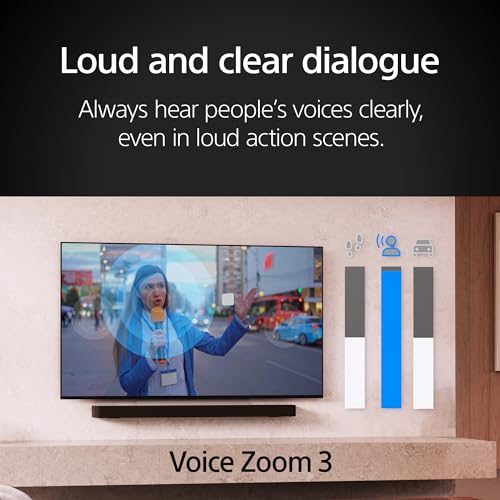
- Acoustic Surface audio provides sound-from-screen immersion and strong built-in audio
- Console-friendly features (Auto HDR Tone Mapping, Auto Genre Picture Mode) optimize PS5 playback
Samsung Frame LS03F
Cons
- You may find the smart OS and Art Store experience requires subscriptions and can feel clunky
- Picture processing and black-level uniformity lag behind top-tier OLEDs in deep-dark scenes
Sony XR8B OLED
Cons
- Peak HDR brightness is lower than QLED alternatives, which can limit impact in very bright rooms
- Some users report occasional software/connectivity quirks (Wi‑Fi, remote) that may need updates
Design, Size and In‑Room Experience
Samsung Frame — gallery-first, wall‑flush
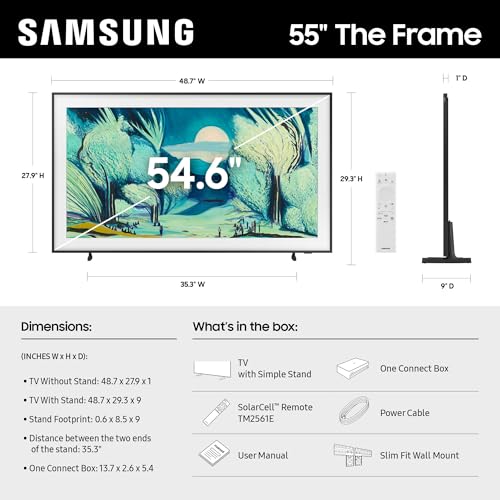
The Frame is built to disappear into your décor: a slim-fit wall mount, customizable bezel (sold separately) and an external hub let you run a single cable to the set. The matte, print-like screen and Art Mode prioritize low-reflection, museum-style presentation when idle. At 55″ it fits tighter rooms and closer seating — plan for roughly 4–7 ft (1.2–2.1 m) viewing distance for comfortable 4K detail and art appreciation.
Sony A80J — immersive OLED footprint
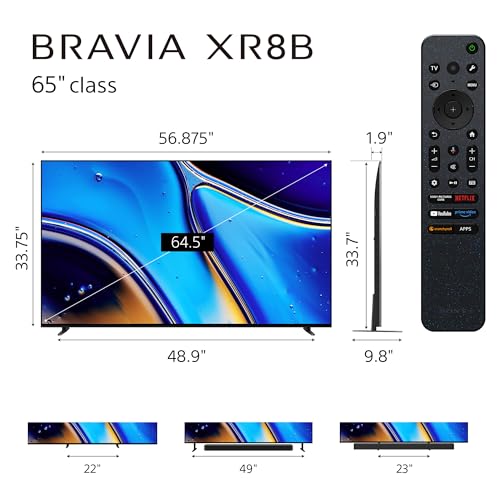
Sony’s 65″ OLED delivers a larger visual field and narrower bezels for a more cinematic presence. The screen’s self-lit pixels produce deeper blacks and stronger contrast, making it better for dedicated home theaters or living rooms with 5–9 ft (1.5–2.7 m) seating. The A80J’s slim profile and minimalist stand optimize floor-to-ceiling placements; expect a slightly greater wall setback if you use an articulating mount.

Practical considerations
- Choose Frame if you want art-first integration and a flush, low-glare wall installation.
- Choose Sony if screen size, contrast and an unobstructed cinematic image matter more than décor blending.
Panel Technology, Processing and HDR Performance
Panel characteristics — brightness vs black levels
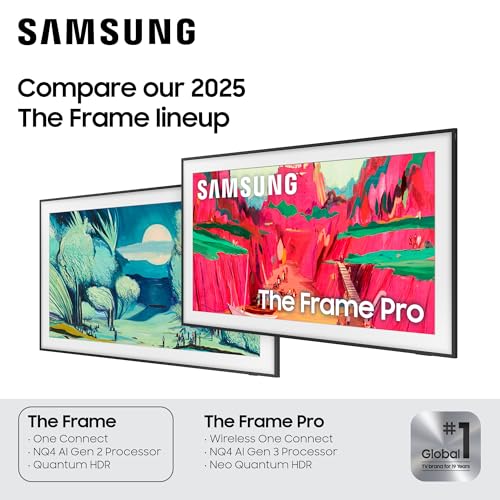
The Frame’s 55″ QLED uses Quantum Dot color with Samsung Vision AI and the NQ4 AI Gen2 pipeline to push high peak luminance and saturated highlights. You get punchy HDR speculars and better performance in bright rooms, at the cost of less perfect black floor and slight blooming around bright objects.
Sony’s 65″ OLED (BRAVIA XR lineage/Cognitive XR) delivers self‑emissive pixels for native perfect blacks and infinite contrast. You’ll see superior shadow detail, near-zero blooming and more uniform dark‑scene rendering — ideal for dark-room movie viewing and Dolby Vision tone mapping.

Processing, HDR tone mapping and motion
- Samsung NQ4 AI Gen2 + Vision AI: aggressive highlight boosting, strong color saturation, very good AI upscaling for SDR→HDR; handles mixed HDR metadata within Samsung’s HDR stack (no Dolby Vision support).
- Sony BRAVIA XR (Cognitive XR lineage): more conservative, film‑centric tone mapping, superior Dolby Vision handling, and more natural color grading preservation.
- Motion & gaming: Samsung favors high‑refresh performance (up to 4K/144Hz, strong Motion Xcelerator) for gaming; Sony’s XR OLED Motion delivers excellent blur reduction and PS5 auto HDR/genre mapping for consistent picture fidelity.
Feature Comparison
| Features | Samsung Frame LS03F | Sony XR8B OLED |
|---|---|---|
| Screen Size | 55-inch | 65-inch |
| Panel Type | QLED with matte, print-like finish | OLED (self-lit pixels) |
| Resolution | 4K UHD | 4K UHD |
| HDR Formats | HDR10+, HDR10 | Dolby Vision, HDR10 |
| Peak Brightness | Higher peak brightness — better in bright rooms | Lower peak vs QLED but excellent perceived contrast in dark scenes |
| Matte / Anti-Reflection | Matte, low-glare (print-like) surface | Standard anti-reflection (glossier than matte gallery panels) |
| Processor | NQ4 AI Gen2 | BRAVIA XR Processor |
| Max Refresh Rate | Up to 4K 144Hz (PC/VRR capable) | Up to 4K 120Hz |
| VRR Support | Yes — VRR up to 4K/144Hz | Yes — VRR up to 4K/120Hz (console optimized) |
| HDMI Version | HDMI 2.1 (ports support high-bandwidth features) | HDMI 2.1 (ports with PS5 optimizations) |
| Game Features | Low input lag, VRR, Game Mode optimized for high refresh rates | Auto HDR Tone Mapping, Auto Genre Picture Mode, dedicated Game Menu |
| Smart Platform | Tizen-powered Smart Hub with Samsung Vision AI | Google TV (Google Assistant, Chromecast built-in) |
| Voice Assistants | Alexa built-in (Bixby/Samsung voice features supported) | Google Assistant built-in; AirPlay 2 and Alexa compatibility |
| Art Mode / Gallery | Dedicated Art Mode with Art Store and user photo upload (subscription for full library) | No dedicated art/gallery presentation mode |
| Design & Mounting | Slim frame design, flush wall-mount with external hub (magnetic bezels optional) | Slim OLED panel, standard flush wall-mount or tabletop stand |
| Sound System | Built-in speakers with AI-enhanced sound processing | Acoustic Surface Audio+ (sound-from-screen) |
| Audio Technologies | Samsung Vision AI audio processing | Dolby Atmos, DTS:X support |
| Local Dimming / Pixel Control | QLED zone/local dimming control | Per-pixel self-emissive control (no traditional local-dimming zones) |
| Input Lag (typical) | Very low — strong for competitive gaming | Very low — console and casual competitive gaming friendly |
| Year Model | 2025 | 2025 |
| Price | $$ | $$$ |
Smart Platform, Connectivity and Gaming Features
OS and ecosystem
You get Tizen on the Samsung Frame with Art Mode and Alexa built‑in — good for integrated art display, Samsung apps and voice control tied to Samsung services. Sony runs Google TV with native Google Assistant, broader Cast/AirPlay support and tighter app search/aggregation. Pick Alexa if you’re already in Amazon/Alexa home‑automation; pick Google TV if you value search, Assistant routines and cross‑device casting.
Inputs and connectivity
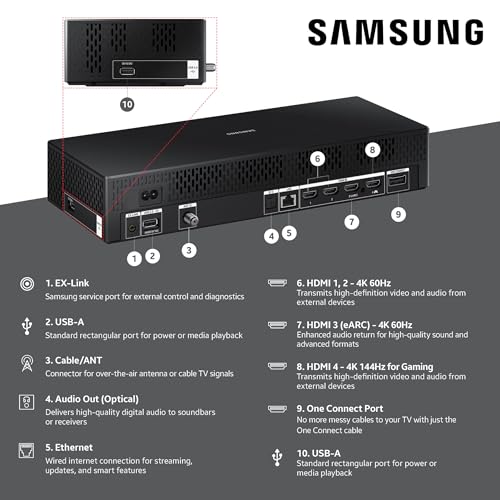
Samsung advertises high refresh rates (up to 4K/144Hz) and VRR but HDMI feature sets vary by model — verify which HDMI ports are full HDMI 2.1. Sony’s XR8B ships with HDMI 2.1‑class features (4K/120Hz, likely VRR/ALLM) and Dolby Vision passthrough, making signal handling predictable for consoles and HDR sources.

Gaming features and latency
- Sony: Auto HDR Tone Mapping, Auto Genre Picture Mode for PS5, low‑lag modes and VRR/ALLM — optimized for PlayStation.
- Samsung: Strong upscaling, high refresh capability, and VRR support (confirm exact port specs).
If you demand console‑level optimizations and guaranteed PS5 features, favor the Sony; if you value Art Mode + bright‑room performance and possibly higher raw refresh, the Frame can suffice if its HDMI 2.1 implementation matches your needs.
Value Proposition and Buyer Scenarios
Price‑per‑inch and long‑term value
The Frame (55″) runs about $898 — roughly $16.3 per inch. The Sony (65″) at $1,198 is about $18.4 per inch. The Sony costs more up front but delivers OLED contrast and PS5‑centric features that increase long‑term viewing and gaming value.
Room lighting and aesthetic priorities
If your room is bright or you want a wall‑first decorator piece, the Frame’s matte Art Mode, slim profile and customizable bezels add lifestyle utility you’ll use daily. If you want a darker, cinema‑grade image, Sony’s OLED delivers unbeatable blacks and HDR fidelity in dim viewing environments.
Warranty, burn‑in and resale considerations
Factor OLED burn‑in risk for static UI or heavy HUD gaming; Sony typically offers similar warranties but consider extended coverage if you game a lot. The Frame’s unique aesthetics can improve resale in design‑oriented markets; Sony retains value for cinephiles and gamers.
Buyer scenarios
- You want a stylish living‑room centerpiece and daytime viewing: choose Samsung Frame.
- You prioritize perfect blacks, HDR impact and PS5 features: choose Sony XR8B.
- You need a compromise for mixed bright/daytime use and occasional gaming: choose the Frame if space/decoration matters; choose Sony if picture fidelity is primary.
Final Verdict — Pick Based on Priorities
If your priority is a TV that doubles as wall art and performs well in bright living spaces, buy the Samsung Frame 55. For the best cinematic contrast, deeper blacks and stronger PlayStation‑optimized gaming at a larger size, buy the Sony A80J 65 — declared the overall winner for picture and gaming performance.
Match your choice to room size, ambient light and whether art‑mode aesthetics or ultimate HDR/gaming fidelity matter most, and budget constraints too.

Author

Like this deal? Get deals like this every week.

