

Which will actually blend into your decor while delivering gallery‑grade color and near‑zero bezel immersion — can your room handle the G1’s OLED depth or is The Frame’s matte art mode the smarter fit for your space?
Art or black hole? You get a concise side-by-side of the Samsung The Frame LS03D and LG Gallery G5 OLED65, covering design, panel tech, HDR performance, smart features, and room-fit recommendations so you can choose the best match right away.
Wall Gallery
8.6
You get an aesthetic-first TV that genuinely looks like framed artwork on your wall and minimizes glare with a certified matte finish. Expect very good color reproduction for art and video, but plan for compromise if you want the latest HDR/format flexibility or a completely ad-free smart experience.
Bright Cinema
9.3
You get class-leading OLED contrast and a bright-room tuned evo panel that keeps black levels while pushing highlights harder than previous generations. The set is engineered for cinematic picture and high-performance gaming, but expect a premium spend and a wall-first installation mindset.
Samsung Frame 65
- Picture Quality – 8.6
- Bright Room Performance – 8.5
- Design & Aesthetics – 9.5
- Smart Features & UX – 7.9
LG Gallery 65
- Picture Quality – 9.6
- Bright Room Performance – 9.3
- Design & Aesthetics – 9.4
- Smart Features & UX – 8.8
Samsung Frame 65
Pros
- Museum-like Art Mode with Pantone-validated ArtfulColor
- UL-certified matte anti-reflection for low-glare wall display
- Customizable interchangeable bezels and slim fit wall mount
- One Connect Box reduces visible wiring for a clean installation
LG Gallery 65
Pros
- True OLED perfect blacks with OLED evo brightness booster for punchy highlights
- Gallery-oriented one-wall design with near-zero gap when mounted
- Alpha 11 AI processor with advanced upscaling and film-first modes
- Top-tier gaming features (0.1ms response, VRR, G-Sync/FreeSync, 120Hz)
Samsung Frame 65
Cons
- Smart platform can be cluttered with promotional content and push services
- Advanced picture features (e.g., Dolby Vision) are not as comprehensive as some competitors
LG Gallery 65
Cons
- Higher price tier compared with lifestyle QLED alternatives
- Gallery models typically omit a stand — wall mounting is expected
Design, Aesthetics & Installation: Art Mode vs Flush Gallery Fit
Samsung LS03D — Art-first presentation
You’ll notice The Frame prioritizes art presentation: interchangeable bezels, Art Mode with Pantone-validated ArtfulColor, and a matte anti-reflection surface that reduces glare when the display acts like a framed print. Electronics and a One Connect-style feed sit behind the frame, so the LS03D is thicker than a pure OLED but looks intentionally decorative when mounted.


LG OLED65G5WUA — Gallery-first, near-invisible display
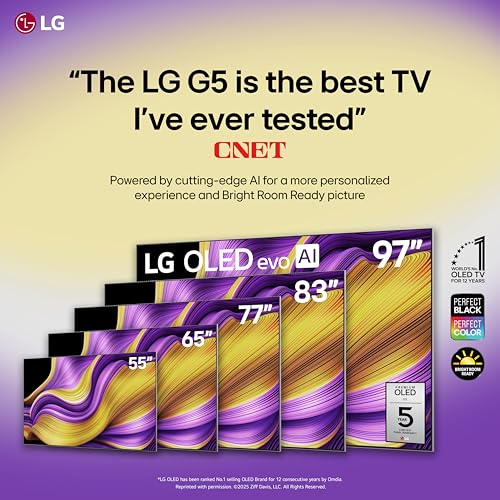
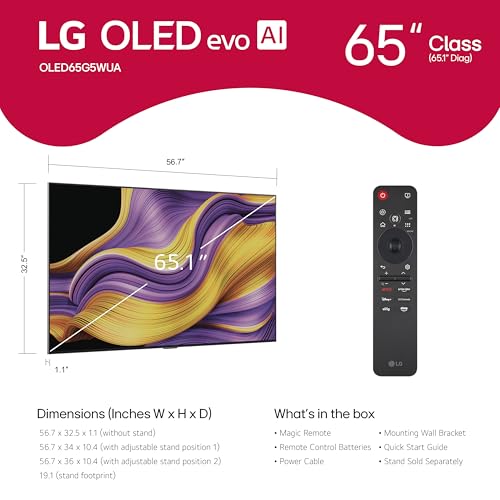
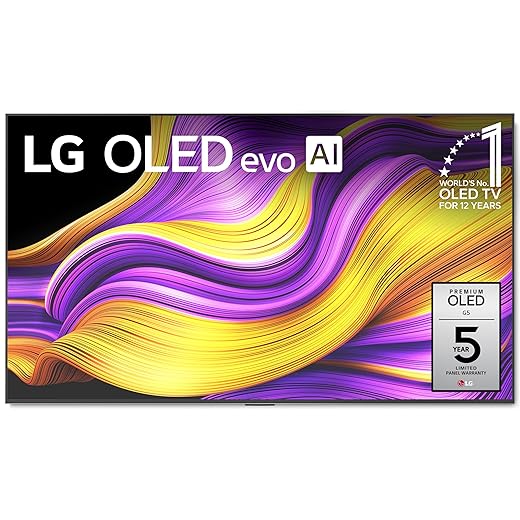
The G5 emphasizes an invisible, picture-on-the-wall effect. OLED evo lets LG push an ultra-thin panel and near-flush One Wall mount that hides cabling and minimizes gap. The panel depth and minimalist bezel make the TV disappear into the room when off.
Installation & practical differences
- Samsung is more forgiving: decor options and slimmer mounting tolerance.
- LG requires precise flush mounting and close-to-wall clearance for the intended seamless look.
- Consider room lighting: Samsung’s anti-reflective matte helps bright rooms; LG’s perfect blacks excel in dim or controlled light.
- Check actual TV weight and VESA pattern for secure mounting and professional installation if needed.
Display & Picture Quality: QLED Brightness vs OLED Blacks
Panel fundamentals
You’re choosing between two fundamentally different light sources: Samsung’s LS03D layers quantum-dot enhancement over an LED backlight with local dimming zones, while LG’s G5 uses emissive OLED evo pixels that turn completely off for true black and infinite native contrast. That tradeoff drives everything you’ll see.
Samsung LS03D — QLED strengths
The Frame prioritizes peak brightness, wide color volume and anti‑reflective matte finish, so HDR highlights pop in daytime or glare-prone rooms. Samsung’s Quantum HDR and AI upscaling preserve detail in SDR and upconverted sources; local dimming improves contrast versus standard LED panels but can’t reach pixel-level black.
- High peak luminance for punchy HDR speculars
- Pantone-validated ArtfulColor and matte anti-reflection for wall display
- Lower risk of image retention/burn-in than OLED


LG OLED65G5WUA — OLED strengths
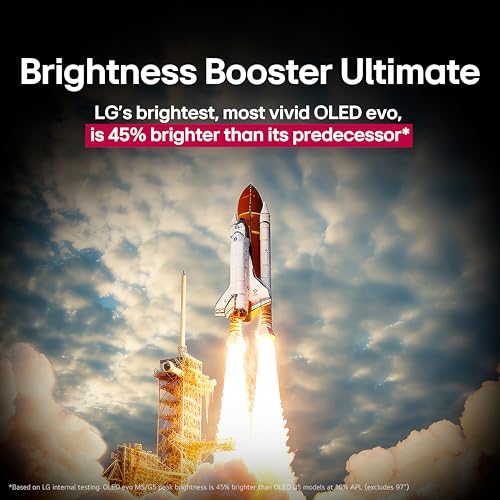
The G5 delivers perfect blacks, superior uniformity and wider viewing angles thanks to self‑emissive pixels and OLED evo Brightness Booster tech. Dolby Vision and LG’s AI Super Upscaling 4K yield excellent tone mapping and shadow detail; mid‑room highlights are softer than QLED but the overall cinematic image reads richer in dark rooms.
- True pixel‑off blacks and infinite contrast
- Better off‑axis color and uniformity
- OLED burn‑in is a long‑term consideration with static UIs

Motion, gaming & calibration
G5’s faster pixel response reduces smearing; both deliver low input lag. G5 supports 120Hz/VRR/G‑Sync/FreeSync for modern consoles; verify LS03D’s VRR/native refresh if you’re a competitive gamer. LG typically needs less aggressive calibration to hit Rec.709/DCI‑P3, while Samsung rewards manual tweaks for best HDR tone mapping.
Smart Features, Audio & Performance: Platforms, Apps, and Connectivity
Smart platforms
You’ll feel the ecosystem difference daily. Samsung’s Tizen on the LS03D centers Art Mode workflows, Samsung TV Plus and Samsung Art Store integration, plus ambient schedules and frame customization. LG’s webOS (G5) emphasizes content discovery, Filmmaker Mode presets, Dolby Vision-aware apps and an AI front-end that surfaces recommendations and Quick Cards.
Audio
Both listings claim Dolby Atmos, but implementations differ: the LS03D is a 2.0.2‑style, art‑focused chassis with thinner perceived low end; the OLED65G5WUA benefits from LG’s Wow Orchestra tuning and a fuller OLED soundstage. For critical listening use an external soundbar or AVR.
Performance & gaming
Both have strong app responsiveness and upscaling: LG’s Alpha 11 AI Super Upscaling targets cinematic detail, Samsung sharpens texture and HDR highlights. If you game, prioritize VRR, ALLM and 120 Hz support—G5 lists G‑Sync/FreeSync; double‑check LS03D HDMI specs on Amazon.
Quick buyer checklist
- Confirm eARC and HDMI 2.1 bandwidth on the Amazon spec page.
- Verify VRR/ALLM/120Hz support if gaming.
- Check recent firmware/update history for long‑term app compatibility.
- Choose the ecosystem that matches your smart‑home assistants and devices.
Feature Comparison Chart
| Features | Samsung Frame 65 | LG Gallery 65 |
|---|---|---|
| Price | $$ | $$$ |
| Panel Type | QLED (Quantum Dot-enhanced LED) | OLED evo (self-emissive pixels) |
| Screen Size | 65 inches | 65 inches |
| Resolution | 4K UHD (3840 x 2160) | 4K UHD (3840 x 2160) |
| Peak Brightness | High (typical range for QLED models; strong HDR highlights) | Very high for OLED evo (Brightness Booster Max; stronger HDR highlights vs prior OLEDs) |
| Anti-Reflection / Matte | UL-certified matte anti-reflection (glare-free finish) | Verified low-discomfort glare (UGR < 22); glossy surface with anti-glare optimizations |
| Matte Finish | Yes — certified glare-free matte display | No (glossy panel with glare reduction tech) |
| Art Mode / Ambient | Samsung Art Store + Art Mode; extensive curated gallery (subscription available) | Gallery/Art display for photos and art; fewer third-party marketing art bundles but good personalization |
| Frame Customization | Interchangeable bezels (sold separately); many finish options | Slim one-wall design; not designed for interchangeable bezels |
| HDR Support | Quantum HDR (HDR10+, HLG) | Dolby Vision, HDR10, HLG |
| Processor | Quantum Processor 4K | Alpha 11 AI Processor Gen 2 |
| Refresh Rate | Motion processing with upscaling (model-dependent native rate) | Up to 120Hz native (ideal for gaming and low-latency content) |
| HDMI Inputs | Multiple HDMI ports (versions may vary by model) | 4x HDMI (HDMI 2.1 support on inputs) |
| Gaming Features | ALLM/VRR support on select inputs; not as gaming-focused as gallery OLEDs | 0.1ms response, VRR, NVIDIA G-Sync, AMD FreeSync, ALLM; Game Optimizer |
| Sound Output | 2.0.2CH built-in speakers with Dolby Atmos processing | Built-in stereo / enhanced processing; Dolby Atmos support and Wow Orchestra integration |
| Wall Mount Fit (Gap) | Slim Fit Wall Mount included; designed to sit flush though slight gap possible depending on wall | One Wall Design; virtually no visible gap when properly installed |
| Weight | 50.3 pounds | 48.5 pounds |
| Dimensions (HxWxD) | 10.3 x 57.4 x 34.2 inches | 1 x 56.7 x 36 inches |
| Warranty | Standard manufacturer warranty (check local terms) | 5-year limited panel warranty (G series panel warranty policy) |
| Special Features | Pantone-validated ArtfulColor, One Connect Box, customizable digital mat | Brightness Booster Max, Filmmaker Mode, Alpha 11 AI, advanced gaming toolset |
Use Case, Room Fit & Value: Which Model Matches Your Space?
Daytime living & decor
If your TV doubles as decor in a bright living area, choose the Samsung LS03D. Art Mode, interchangeable bezels, and a UL‑certified matte anti‑reflection screen keep images and artworks readable under ambient light. It’s the more budget‑friendly option (~$997 on Amazon).
Dedicated dark‑room home theater
If you prioritize cinematic fidelity, pick the LG OLED65G5WUA. OLED evo delivers the deepest blacks, Dolby Vision/Dolby Atmos support, and a near‑flush gallery mount for a true theater look. Expect higher cost (~$1,997) and a 5‑year panel warranty on LG’s listing.
Mixed use & gaming
For mixed use, weigh brightness, input features and burn‑in risk. LG offers stronger gaming specs (120 Hz, VRR, G‑Sync/FreeSync), while Samsung’s QLED brightness and anti‑glare surface are friendlier for daylight. If you game heavily, verify HDMI 2.1 bandwidth and VRR/ALLM support on the Amazon spec page; if you display static art often, prefer the QLED to reduce burn‑in exposure.
Buyer checklist
- Compare current Amazon price, shipping and return policy
- Verify warranty details (LG’s 5‑year panel warranty vs Samsung standard terms)
- Confirm HDMI 2.1/eARC/VRR/120Hz specs for your devices
- Match mount/installation needs (gallery flush vs Slim Fit/One Connect)
Final Verdict
The LG OLED65G5WUA is the clear winner for your gaming, cinema.
Choose Samsung LS03D for bright, art-forward rooms; choose LG for darkest blacks, cinematic fidelity, theater setups. Ready to mount?

Author

Like this deal? Get deals like this every week.

