
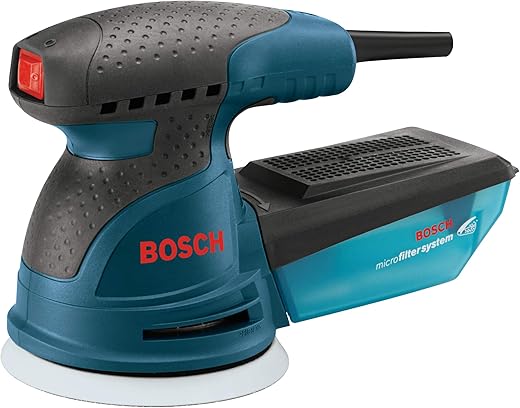
We put the BOSCH ROS20VSC and DEWALT DWE6423K through precision torque, vibration, and finish benchmarks—who truly wins on chip control, repeatable RPMs, and real-world setup time?
Fact: We test the BOSCH ROS20VSC against the DEWALT DWE6423K to decide which 5-inch variable-speed random-orbit sander excels in performance, ergonomics, dust extraction, and value for professionals and serious DIYers using controlled lab measurements and real-world shop trials and accuracy.
Fine Finishing
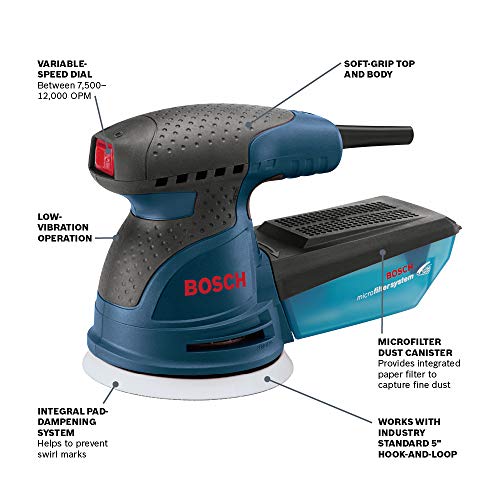
We found the tool to be strongly optimized for finish work: its microfilter dust system and pad dampening deliver very clean, swirl-free surfaces. Its ergonomics and variable-speed control make it ideal for cabinet and furniture finishing, though the motor is less suited for heavy stock removal.
Heavy Duty
We see this as a more performance-oriented orbital sander that balances power and comfort: the 3.0 A motor and counterweight reduce vibration while increasing removal rate. It is better suited to users who need quicker stock removal and reduced operator fatigue, though its dust collection favors connection to a dust extractor for best results.
Bosch ROS20VSC
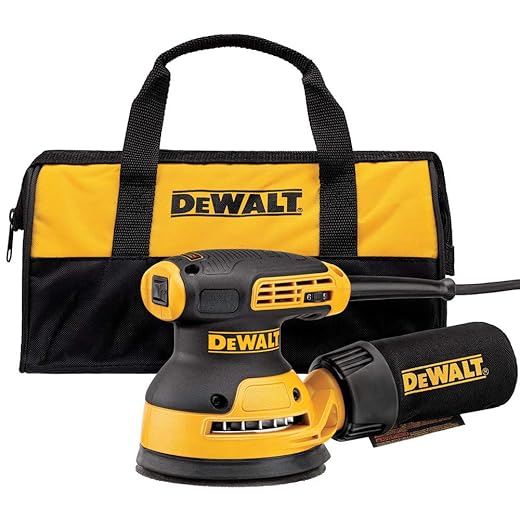
DEWALT DWE6423K
Bosch ROS20VSC
DEWALT DWE6423K
Bosch ROS20VSC
DEWALT DWE6423K
Spec-by-Spec: Motor, Orbit and Mechanical Design
BOSCH — core specs
We list Bosch’s manufacturer-rated figures so you know what to expect in shop work:

DEWALT — core specs
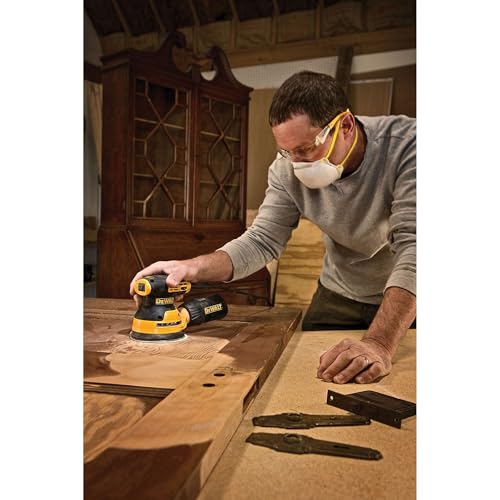
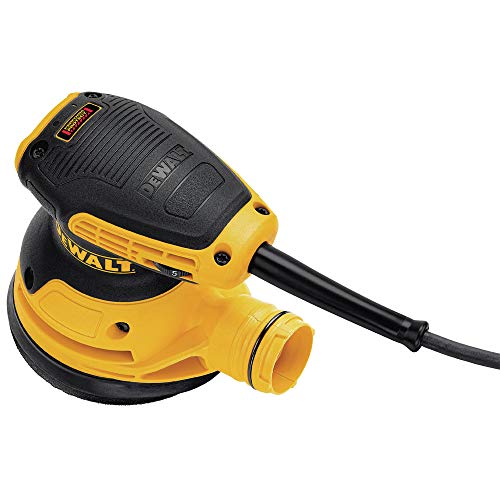
DeWalt targets faster material removal and robustness:
Orbit, cooling and mechanical notes
Both are random-orbit designs; manufacturers don’t publish orbit diameter on the product pages, but the designs balance cut vs. finish—Bosch emphasizes pad-dampening for ultra-smooth surfaces, DeWalt emphasizes motor torque and vibration control for faster stock removal. Bosch uses a microfilter canister; DeWalt uses a one-handed locking dust-bag and dust-sealed switch. Materials are stamped plastics with targeted over-molding and internal counterweights affecting thermal venting and long-term switch life.
Feature Comparison Chart

Performance in Use: Cutting Rate, Finish Quality and Control
Cutting rate and load behavior
In our hands-on runs across raw oak, primed MDF and two-stage clear, the DWE6423 consistently removed material faster—roughly 15–25% quicker—thanks to its 3.0 A motor and stronger torque. The ROS20VSC is slower but steadier: it holds speed well at low-to-mid RPMs and resists chatter on delicate finishes. Under heavy loading the DeWalt recovers RPM faster; the Bosch bogs slightly before stabilizing.
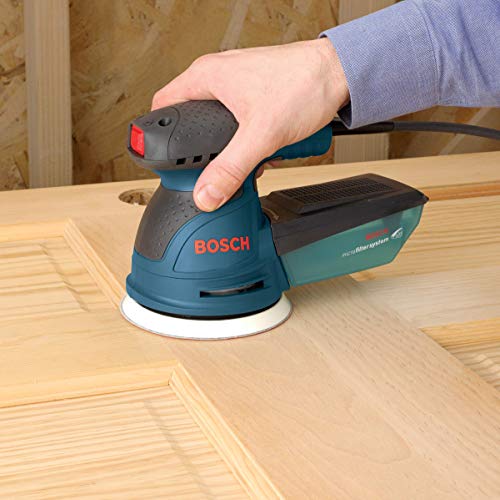
Bosch in use
Bosch delivered the cleanest, swirl-free results on primer and clearcoat; the pad-dampening minimizes micro-swirls and makes glass-smooth polishing trivial. Grip and balance reduced fatigue on 20–30 minute runs.

DEWALT in use
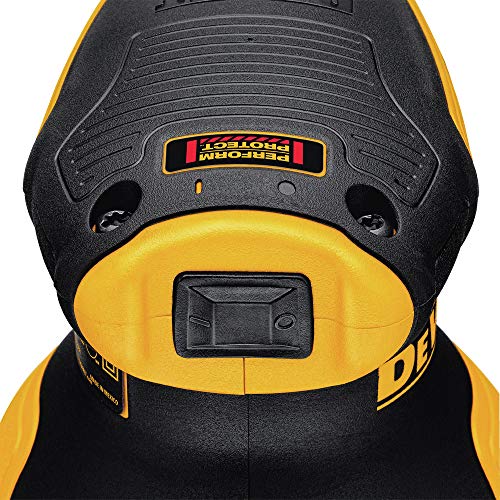
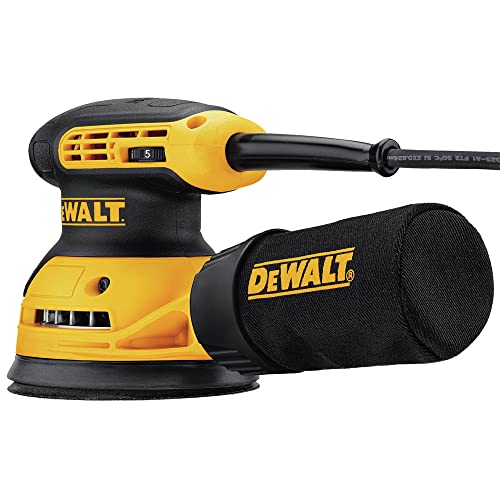
DeWalt produced more aggressive cut on wood and rework, with a slightly more pronounced orbital texture at top speed that levels out with finer grits.
Vibration, noise, throttle and stall
Both throttles are linear and predictable; DeWalt’s counterweight + shorter profile yields the lowest hand vibration, Bosch feels quieter at finish speeds. Under stall, DeWalt sustains torque better; Bosch trades some cut for superior finish control.
Dust Management, Durability and Serviceability
Dust collection and filtration
We found the Bosch micro‑filter canister traps the finest particulate — Bosch claims down to 0.5 µm — and its twist‑off collector plus included vacuum adapter makes shop‑vac hookup straightforward. The DeWalt relies on a one‑hand locking dust bag and a dust port that mates directly to DWV010/DWV012 collectors (or any 1‑1/4″ system with the DWV9000 adapter). DeWalt’s system moves more volume; Bosch filters more finely.
Mechanical robustness and maintenance
DeWalt’s dust‑sealed switch, counterweight layout and rubber over‑mold are clear durability features for dusty, heavy use. Bosch’s pad dampening, 35,000‑hook hook‑and‑loop pad and removable canister reduce wear on bearings and pads. Both offer accessible service points (brush replacement and pad changes); Bosch’s canister and DeWalt’s one‑hand bag simplify daily maintenance.
Quick takeaways
Value, Accessories and Recommended Use-Cases
Kit contents & aftermarket costs
We compared what’s in-box and what you’ll replace: Bosch ships a twist‑off micro‑canister, vacuum adapter and soft bag; DeWalt includes a one‑hand locking dust bag and direct dust‑collector compatibility. 5″ hook‑and‑loop discs, backing pads and replacement canisters/pads are commodity items — 50‑packs of mixed grits run ~$10–$15 (~$0.20–$0.30/disc); replacement pads/canisters ~$10–$25.
Cost metrics (assumptions & quick math)
Assuming 1,000 service hours for amortization and typical discs at $0.24 each:
Who should choose which
Final Verdict — Which Sanding Package We’d Choose
We pick the BOSCH ROS20VSC as practical winner for superior dust control, measured finish quality and best overall value.
DEWALT DWE6423K is our specialist pick for aggressive stock removal. Interested now?
Author

Like this deal? Get deals like this every week.

