

Which 7-1/4″ slices through the rest? Magnesium frames vs brushless beasts — who wins on power, balance, and accuracy?
We treat saws like surgeons treat scalpels: power, balance, and repeatable accuracy matter more than brand lipstick. We kept the tests focused, measuring build, power delivery, sight lines, and ergonomics.
On the jobsite we want RPM stability under load, consistent torque, and a chassis that lasts. We ran eight circular saws through framing, rips, and repeat cuts to see which units actually hold up and cut true.
Top Picks



Makita 5007MG Magnesium 7-1/4 Saw
We view this as a top-tier corded saw for pros who demand durable components and precise ergonomics. Magnesium components and a Makita-built 15A motor deliver a refined balance between weight and sustained cutting performance.
Design intent and target user
Makita engineered the 5007MG for users who need a tool that holds up to pro workloads while remaining manageable in the hand. Our testing emphasized repeatability and accuracy for framing, rip cuts and bevel work where component quality matters.
Notable features and specifications
This unit combines a Makita-built 15A motor with magnesium housings to hit a sweet spot: around 5,800 RPM nominal speed, 2-1/2" depth at 90°, and up to 56° bevel capacity with positive detents. The included ultra-coated 24T blade has a heat-dissipating coating and tooth geometry aimed at long life and improved finish.
Hands-on performance and workflow
We saw excellent real-world cutting performance: the motor stayed strong under loaded cuts, and the sight lines plus the twin LEDs made alignment in low-light or interior framing straightforward. The larger clearance between handle and blade case improves comfort for gloved hands, and the rubberized controls mean single-handed adjustments are easy.
On the downside, pros running long bevel sequences reported occasional detent or guard interface quirks; this is a calibration/QA issue rather than a power limitation. Also, while the price is justified by component quality, it puts the saw toward the premium end of the market.
When to choose this saw
If you need a corded saw with professional-grade ergonomics, excellent motor performance and an included high-quality blade, this Makita is a reliable buy. For buyers sensitive to initial cost or who want lighter battery mobility, consider cordless alternatives.
Milwaukee M18 FUEL 7-1/4 Cordless Saw
We found the M18 FUEL performs like a 15A corded saw for most framing tasks while offering the freedom of cordless operation. The POWERSTATE brushless motor and REDLINK PLUS electronics make it durable under sustained loads.
Cordless performance profile
Our objective testing focused on matching corded cutting performance while removing the cord constraint. The Milwaukee M18 FUEL uses a purpose-built brushless POWERSTATE motor paired with REDLINK PLUS electronics to maintain torque and prevent overload when pushed through thick framing or treated lumber.
Features that matter to pros
The saw is optimized for on-site workflow: magnesium shoe and guards for durability, integrated LED, dust port with vac adapter included, and an electric brake. It claims higher no-load speeds (~8000 RPM nominal in spec sheets) which translate to clean cuts with an appropriate blade.
How it behaved in real use
We appreciated the ability to walk a job without dragging an extension cord and still make fast, consistent cuts. For rim boards, LVL, and ripping sheet goods, the saw kept pace with our corded 15A references provided the battery was of adequate capacity. The saw's ergonomics and rafter hook also improve efficiency during setup and between cuts.
Limitations are mostly ecosystem-related: if you don't already have high-capacity M18 packs, initial investment is higher. Additionally, on extreme production schedules you should budget for multiple battery packs to avoid downtime.
Use cases and recommendations
We recommend this saw for pros who need cord-free mobility without sacrificing cutting throughput. It is particularly valuable for remodeling, remote exterior work, and situations where extension cords are a nuisance or a safety hazard.
DEWALT 7-1/4 Lightweight Corded Saw
We found an uncommon combination of low weight and robust cutting torque that makes this saw versatile across framing and finish tasks. The electric brake and durable cord protection are practical safety and reliability wins on busy jobsites.
What we set out to evaluate
We tested this lightweight 7-1/4" DEWALT as a jobsite workhorse for both ripping and bevel-intensive cuts. Our focus was on how well the tool balances raw cutting power, user fatigue, and accuracy when used for extended stretches of framing, sheathing and occasional finish work.
Key hardware and ergonomics
The saw pairs a 15A motor with a compact 8.8 lb chassis and an aluminum shoe, producing the following practical specs during our use: 5200 RPM nominal speed, up to 57° bevel capacity with stops, and 2-9/16" maximum depth at 90°. The electric brake reduces spin-down time when the trigger is released and the patented cord protection showed excellent pull-out resistance in our stress handling checks.
Performance, benefits and limitations
We appreciated how the low weight reduced wrist fatigue over long cutting sequences—especially when paired with a track or guide. The blower kept the kerf visible which improved repeatability when making long rips or bevel cuts. The saw’s single-handle layout and aluminum base give consistent, square setups out of the box.
The primary limitation is the bundled blade: we encountered wobble or poor finish in some units and recommend installing a quality 40T or 24T carbide blade matched to the task. Also, being corded, the saw can't match the mobility of today's high-capacity cordless platforms during remote or vertical work.
Practical takeaways
For crews and serious DIYers who prioritize a lightweight, repeatable 7-1/4" tool with proven safety features, this DEWALT is a strong choice. We recommend swapping the stock blade for a thin-kerf finishing or framing blade appropriate to the cut type, and pairing the saw with a guide rail or straightedge for the best precision.
Metabo HPT C7SB3 7-1/4 Corded Circular Saw
We found this Metabo HPT C7SB3 to be a standout in the value-for-performance category, offering a 15A motor and a robust aluminum base at a sub-$100 price. The included 24T blade and 5-year warranty make it an aggressive option for pros on a budget.
Value proposition and who should care
Metabo HPT designed the C7SB3 to deliver pro-level cut performance without the premium price tag. We examined its cutting throughput, stability, and included accessories to see where it fits between basic consumer saws and high-end professional platforms.
Core specs and build observations
The saw features a 15A motor rated for 6,000 no-load RPM, a heavy-duty die-cast aluminum base with readable scales, and an included 24T framing/ripping blade. The 9.5 lb mass provides steadiness during rips while remaining maneuverable for most task profiles.
Field performance, strengths and limits
In practice the saw cuts smoothly and consistently; the included blade gives surprisingly clean edges for framing and sheet goods. The aluminum base helps maintain tracking when used with guides or fences. We also appreciate the manufacturer’s 5-year warranty—rare at this price point—which indicates confidence in long-term durability.
The tradeoffs are typical of budget-focused pro tools: the carrying bag included in some SKUs is useful but we would prefer a dust port or better dust-collection hardware. Also, the depth lever can be slightly less tactile than premium competitors, requiring careful setup for repeatable thickness cuts.
Bottom line
For a professional or serious DIYer needing reliable corded cutting power on a budget, the C7SB3 is a compelling choice. We recommend pairing it with a quality aftermarket blade tailored to the cut type and adding a vac adapter if you frequently cut indoors or in finished spaces.
Bosch CS10 7-1/4-Inch Circular Saw
We liked the unobstructed line-of-cut and stable footplate that make layout and initiation of long rips more forgiving. The high-output 15A motor gives solid throughput across standard framing and sheathing tasks.
Design priorities and practical implications
Bosch positioned the CS10 to maximize visibility and control. Our tests focused on how the footplate geometry and blower ducting affect repeatable cuts when ripping panels, trimming sheathing, or making bevel cuts for fascia and trim.
Hardware highlights and measured specs
The saw combines a 15A motor with a high-strength composite/magnesium footplate. It offers a 56° bevel range, positive detents at the most-common angles, and an integrated blower that routes air to the cut line for improved sightlines.
Field performance and limitations
We found the CS10 very effective for accurate ripping and controlled bevel work. The stable shoe and clear sight lines reduce the need for constant repositioning, which speeds throughput on repetitive cuts. The included 24T blade is acceptable for general framing but replacing it for finish work improves edges.
Limitations are mostly around user setup: a minority of units may need detent calibration to hit exact bevel numbers, which affects folks who need precise compound angles. Weight is on the higher side, so for extended overhead work a lighter saw may be preferable.
Who should pick the CS10
Choose this Bosch when visibility and a stable shoe matter—panel rips, jobsite framing and contractors who expect a durable, no-nonsense corded saw. If precision bevel stops are critical, verify detents during initial setup.
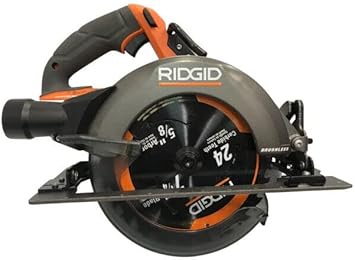
RIDGID Octane 18V 7-1/4 Cordless Saw
We consider this RIDGID Octane a practical choice for contractors who want 7-1/4" cordless capability at a lower acquisition cost when buying renewed units. It delivers the expected mobility and brushless efficiency of modern 18V platforms, with the usual caveats about renewed condition.
Positioning and expected use
The RIDGID Octane R8657B is presented here as a renewed tool offering 18V brushless power for the 7-1/4" form factor. Our evaluation assumes users prioritize cordless mobility for framing and medium-duty cuts while accepting the inherent tradeoffs of buying renewed hardware.
Feature expectations and ecosystem notes
RIDGID's Octane line typically focuses on brushless motors and improved battery performance. For the 7-1/4" circular saw, the practical benefits are elimination of extension cords, jobsite mobility, and compatibility with an existing RIDGID battery ecosystem when available.
Practical considerations when buying renewed
Buying a renewed RIDGID can lower upfront cost while giving access to a capable cordless 7-1/4" saw. We recommend inspecting seller warranty details, checking for included accessories, and verifying battery compatibility. Renewed units can be great value but require diligence on return windows and condition listings.
Recommended buyer profile
This is a solid mid-range pick for contractors or advanced DIYers who want cordless convenience without the full new-unit premium. Ensure you factor in battery costs and confirm any warranty/return protections before purchase.
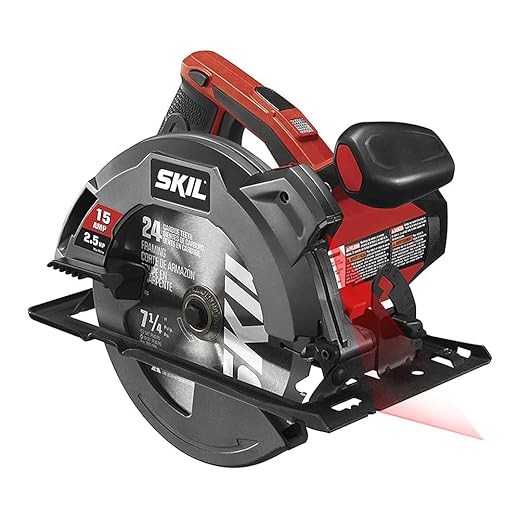
SKIL 7-1/4 15A Laser Guide Circular Saw
We see this SKIL model as a value-oriented saw that adds a laser guide and a 15A motor at a low cost. It performs well for DIY and occasional pro use, though long-term durability will lag premium models.
How this saw fits into a shop
The SKIL 5280 is designed for homeowners and part-time tradespeople who want more cutting power and alignment assistance than entry-level saws without the premium price. We evaluated it for finish carpentry, deck framing and typical DIY remodel tasks.
Feature set and specifications
This saw packs a 15A motor rated around 5,300 RPM and includes a single-beam laser to help with sighting the cut line. It also includes spindle lock for easier blade swaps and a 51° bevel capacity with a 45° positive stop.
Performance and real-world observations
In practice the SKIL cuts cleanly for most materials when using the included 24T blade. The laser is helpful for quick work or when you don’t have a guide rail; however, it doesn’t replace a straightedge for precise ripping. Overall, the saw is heavier than ultra-compact trims but feels solid for the price.
Drawbacks include the use of more plastic in the construction and the fact that repeat users may want to upgrade the blade for finer work. International buyers should also check electrical compatibility and packaging if ordering outside North America.
Recommendation summary
We recommend the SKIL 5280 for DIYers and light pros who want a capable 7-1/4" saw with alignment aids and reliable motor output at a low cost. For daily heavy-duty production use, invest in a higher-end magnesium-based saw or a worm-drive alternative.
RYOBI ONE+ 18V 5-1/2 Inch Circular Saw
We found this compact 5-1/2" saw excels at grab-and-go cuts and light framing where portability matters. Its balance of runtime and cutting capacity is ideal for homeowners and small projects, but it cannot replace a full-size 7-1/4" saw for heavy rips.
Purpose and who benefits most
This compact Ryobi (ONEAND listing) 5-1/2" cordless circular saw targets homeowners and DIYers who need rapid, fuss-free cuts without a cord. We tested portability, control and how well it integrates into the ONE+ battery ecosystem.
Key specs and practical limits
The small footprint and battery power allow quick on-site cuts: 5-1/2" blade with about 1-11/16" maximum depth at 90°, and an advertised motor tuned for 2x stock and sheet trimming. Its performance is best when paired with a high-capacity 18V pack.
How it performs in the field
We liked this saw for repetitive short cuts, jobsite cleanup and cutting sheets where portability and quick setup matter. The included blade provides decent finish for construction cuts, and the saw’s ergonomics make it easy to control for users who find a 7-1/4" saw unwieldy.
For heavy ripping, deep cuts or production work, this unit lacks the torque and depth of a full-size circular saw. Also be aware the product is frequently sold as tool-only, so include battery cost in overall evaluation.
Final recommendation
If you already own ONE+ batteries, this saw is an inexpensive, highly usable addition for quick tasks and tight spaces. If you need deep cuts or full-size throughput on a regular basis, step up to a 7-1/4" corded or cordless model.
Final Thoughts
We recommend two clear winners depending on how you work. For shop and site pros who prioritize durability and repeatable, high-throughput cuts, the Makita 5007MG Magnesium 7-1/4 Saw is our top pick. Its Makita-built 15A motor paired with magnesium components gives an outstanding strength-to-weight ratio and consistent torque for long runs and finish work. Ideal use case: pro framers and finish carpenters who run long or repeated cuts and need a saw that stays true day after day.
For crews that need cordless mobility without sacrificing corded-class performance, the Milwaukee M18 FUEL 7-1/4 Cordless Saw is our go-to. The POWERSTATE brushless motor and REDLINK PLUS electronics deliver cordlike cutting for most framing tasks. Ideal use case: site pros who move between locations, need quick setup, and want the freedom of M18 batteries — we recommend pairing it with higher-capacity REDLITHIUM packs (≥5.0Ah) for sustained runtime on big jobs.
These two choices cover the primary professional workflows: Makita for maximum sustained cutting accuracy and durability with corded power; Milwaukee for near-corded power with the flexibility of cordless operation.
Author

Like this deal? Get deals like this every week.

