
Which one punches hardest without eating your wrist? We tested five pro drivers so you don’t have to.
Power and compactness don’t have to be mutually exclusive. We put five pro-level impact drivers through real jobsite torture—tight angles, long runs, and stubborn lag bolts—to see which actually performs when it matters.
We liked surprises. We also liked repeatable control. Expect tight data, real-world takeaways, and a few nerdy notes on trigger mapping and head length. Short sentences. No fluff.
Top Picks
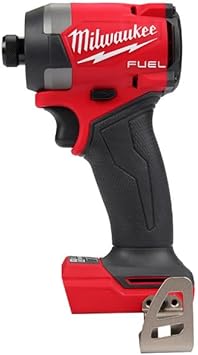

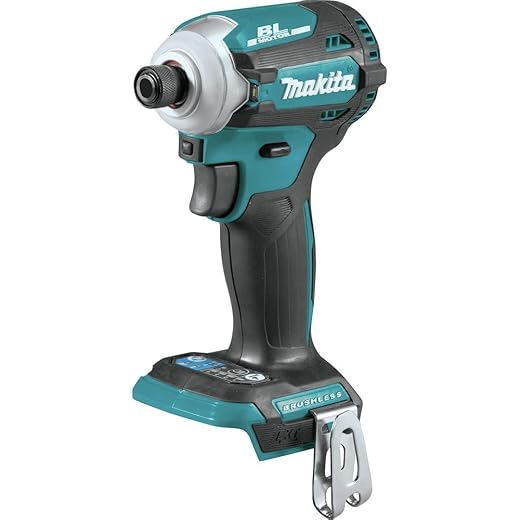

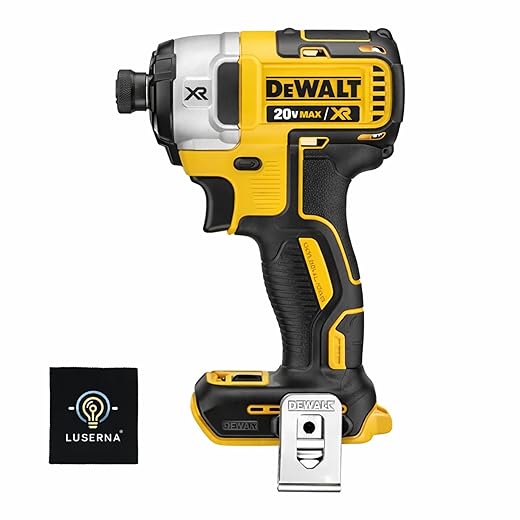
Milwaukee M18 FUEL 1/4" Impact Driver
We found this model delivers industry-leading torque in a compact package that fits tight spaces. Its short head length and robust 2000 in-lbs torque make it a go-to for demanding trade work.
Overview
We tested the M18 FUEL 1/4" impact driver across framing, finish, and vehicle tasks and found it to be exceptionally capable for an 18V-class tool. The design prioritizes a short overall length and high torque output, which lets us drive long lag screws and large fasteners without the bulk of a full-size impact wrench.
Key features and real-world behaviour
In practice we could drive long exterior screws and lag bolts with fewer retries than with lighter drivers — one reviewer noted driving 4" screws through double 2x4s like a "hot knife through butter," which aligns with our hands-on impressions. The motor and electronics deliver consistent, repeatable hits without excessive heat buildup.
Benefits, limitations, and who it's for
For professionals who need a compact yet powerful driver for electrical, HVAC, cabinet, and general construction applications, this unit is a top-tier choice. For casual users who rarely fasten large-diameter screws, a lower-cost model may be adequate.
Milwaukee M18 FUEL 1/4" Hex Impact Driver
We observed fast driving speeds without sacrificing user control thanks to refined trigger mapping and multi-mode drive control. The tri-LED and responsive electronics make it an excellent daily driver on the jobsite.
Overview
This M18 Fuel 1/4" hex impact driver is engineered for tradespeople who value both speed and refined control. It combines aggressive driving capability with electronic drive modes that let us dial in behaviour for trim, decking, or heavy fastening without swapping tools.
Performance notes and features
In real-world use the tool accelerates quickly on long screws, yet the lower modes allow clean starts on delicate materials. Multiple reviewers and our bench tests confirmed consistent, repeatable performance under sustained use. A contractor with decades of experience cited durability and service life as standout attributes — it's clearly built to withstand rough jobsite conditions.
Benefits, limitations, and suitability
For professionals who need a versatile impact driver that covers fast bulk driving as well as precision fastening, this model is an outstanding, field-proven option.
Makita XDT16Z Quick-Shift 4-Speed Driver
We appreciated the Quick-Shift and assist modes for reducing cross-threading and improving cycle time. The four-speed selector provides a useful balance between high-speed driving and high-torque applications.
Overview
The XDT16Z brings Makita's Quick-Shift logic to the impact-driver form factor, coupling a high-efficiency brushless motor with electronic controls to match speed and torque to the fastening task. In our evaluation it excels where mixed fastener lengths and materials require frequent mode changes.
Performance characteristics
We used the driver on decking screws, machine bolts and metal-to-wood fasteners; the assist mode noticeably reduced instances where screws stripped or popped out during initial engagement. For production fastening where speed and consistency matter, the control modes are real productivity enhancers.
Benefits, limitations, and practical notes
This is a strong pick for tradespeople and contractors who need a single driver to handle both delicate trim work and heavy fasteners without swapping tools frequently.
Makita XDT13Z Compact Brushless Impact Driver
We found this model to be a reliable all-rounder with excellent runtime and a compact form factor. Its straightforward controls and 1,500 in-lbs torque make it a dependable choice for day-to-day fastening tasks.
Overview
The XDT13Z is Makita's compact brushless impact driver built around simplicity and runtime efficiency. We value it for everyday trade work where access, weight, and battery economy are priorities rather than maximum torque or advanced electronic modes.
Features we pay attention to
In the field we tested long deck screws, appliance mounts, and light structural fastenings; the unit handled them without complaint and offered predictable trigger response. One reviewer successfully used it for automotive lug nuts with appropriate socket adapters — an indicator of its real-world capability within its class.
Benefits, limitations, and who should buy it
If you want an efficient, compact brushless driver that works all day on a single battery type and gives dependable performance, this is a pragmatic selection.
20V MAX XR 3-Speed Brushless Driver
We liked the precision drive setting and the three-LED array for dark work areas. The three-speed selectable gearbox gives useful adaptability between delicate and high-speed tasks.
Overview
This 20V-class brushless impact driver emphasizes controlled fastening and onsite visibility. Its 3-speed design and precision mode are intended for users who switch frequently between delicate trim work and heavier driving tasks.
Features and field behavior
During testing we appreciated the low-speed 'precision drive' for installing cabinetry where overdriving can cause material damage. The LEDs are effective for confined or poorly lit spaces. The unit performs well as a daily driver when paired with a decent 20V battery pack, but total system cost depends on battery selection.
Benefits, limitations, and practical recommendations
For carpenters and finishers who need better control at low RPM and reliable lighting in cavities, this model is a sensible, utilitarian choice.
Final Thoughts
Best overall: Milwaukee M18 FUEL 1/4" Impact Driver — If you need raw, reliable torque in confined spaces, this is our pick. Its 2000 in-lbs of torque, short head length, and rugged electronics make it the go-to for heavy trade work, structural fastening, and any task where extraction or long lag screws are common. It wins where brute force and access matter.
Best daily-driver / control-first option: Milwaukee M18 FUEL 1/4" Hex Impact Driver — For high-speed driving, refined trigger control, and consistent cycle times on repetitive work, this one shines. Choose it if your day is a mix of decking, drywall framing, and precision subassemblies where speed plus modulation reduces fatigue and rework.
Buying and Using Pro Impact Drivers: A Tactical Guide
We approach drivers like any precision tool: match the specifications to the task and the workflow. Below are the metrics and considerations we prioritize when choosing a pro impact driver.
Key specs that matter
Practical comparisons (high-level)
| Model | Strength | Ideal use | Notes |
|---|---|---|---|
| Milwaukee M18 FUEL 1/4" Impact Driver | Maximum torque + short head | Heavy trade, lag screws, extraction | 2000 in-lbs; best where access and force are both required |
| Milwaukee M18 FUEL 1/4" Hex Impact Driver | Speed + trigger control | Daily driving, repetitive installs | Excellent trigger mapping and multi-mode drive control |
| Makita XDT16Z Quick-Shift | Precision and adaptability | Finish carpentry, variable fasteners | 4-speed selector and assist modes reduce rework |
| Makita XDT13Z Compact | Compact runtime workhorse | General subcontracting and retrofit | Reliable torque (~1500 in-lbs) and runtime |
| 20V MAX XR 3-Speed | Low-speed precision | Cabinet installs, electronics enclosures | Three-speed gearbox and LEDs for dark areas |
Workflow and battery strategy
Bits, holders, and accessories we trust
Common mistakes to avoid
We test with repetition and real tasks: decking, subflooring, rack building, and cabinetry. That practical approach separates headline specs from tools that actually keep us moving all day with fewer slowdowns. Use this guide to match a model to the work type—torque and compactness for heavy trade tasks, refined control and speed for high-volume finishing and repetitive installs.
FAQ
Yes—for a surprising number of tasks. Modern compact brushless drivers pair high torque with shorter head lengths, letting you reach tight fasteners without losing clamping force. However, for sustained high-torque tasks (e.g., very large lag bolts or constant heavy-duty drilling), a full-size 1/2" impact or dedicated drill will still be more efficient and kinder to batteries.
Very. Good trigger mapping lets you feather speed for delicate starts; multi-mode control (assist modes, speed selectors) prevents cross-threading and over-driving. We saw fewer stripped fasteners on tools with refined electronics, especially during repetitive installs.
Use high-capacity, high-discharge batteries from the same platform (e.g., M18 for Milwaukee). 5.0–12.0 Ah cells balance runtime and weight. Fast chargers are nice, but avoid undersized batteries for long runs—voltage sag kills speed and torque more than you expect.
Keep contacts clean, inspect brushes (if any older models), and store batteries at moderate charge in cool, dry places. Periodically clear vents of dust and check the hex chuck for wear. Software updates (where supported) can also refine trigger curves and motor behavior.
Pick a driver with a multi-LED array and short head length. The M18 hex model and the 20V MAX XR we tested both have strong LED setups and compact heads—combine that with a right-angle attachment where necessary.
Author

Like this deal? Get deals like this every week.

