
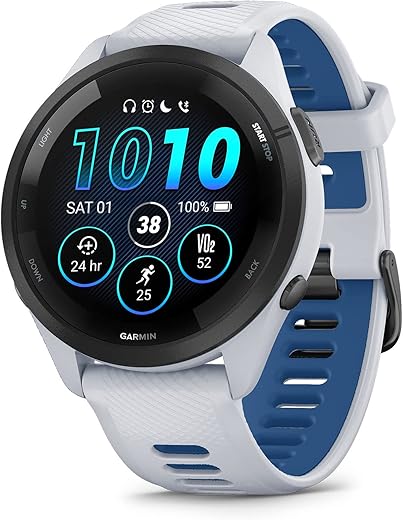
Want pro-grade navigation and multi-day battery life, or a lighter, more focused training tool that actually improves your workouts?
You’ll get a tight side-by-side to decide whether the Forerunner 265’s colorful AMOLED and runner-focused metrics or the fēnix 7 Pro’s rugged sapphire solar design and multisport toolkit better fits your training — quick, clear guidance for your goals today.
Performance Running
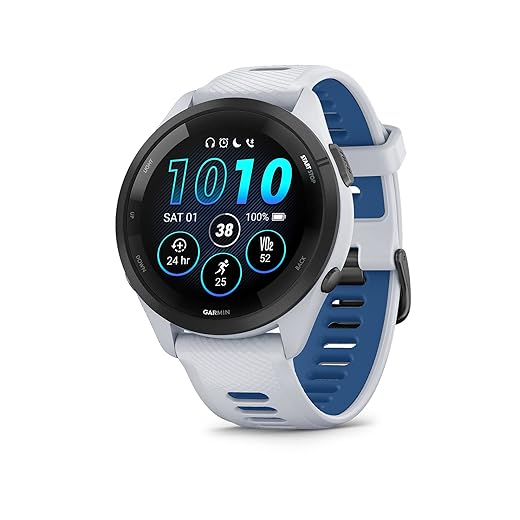
8.5
You get a focused running smartwatch that prioritizes a sharp AMOLED screen and deep training analytics while staying light on your wrist. If you train frequently and value on-wrist metrics and comfort, this is a strong, practical choice.
Backcountry Explorer
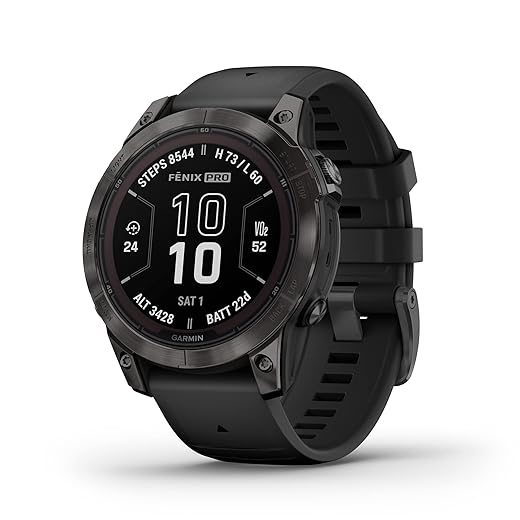
9
You get a do-it-all multisport watch built for long adventures, with industry-leading battery endurance and robust navigation features. If your training includes long outings, backcountry routes or you need solar-extended runtime, this is engineered for that use.
Forerunner 265
- Battery Life – 7.5
- GPS & Navigation – 8.5
- Training Metrics – 9
- Display & Usability – 9
fēnix 7 Pro
- Battery Life – 9.5
- GPS & Navigation – 9
- Training Metrics – 9.5
- Display & Usability – 8
Forerunner 265
Pros
- Vibrant AMOLED display that’s easy to read in most conditions
- Advanced running metrics and training readiness for focused plans
- Lightweight, comfortable fit for daily wear and long runs
- Accurate multi-band GNSS and useful recovery/sleep insights
fēnix 7 Pro
Pros
- Exceptional battery life with Power Sapphire solar extension
- Rugged, premium build and extensive mapping/navigation tools
- Top-tier training and endurance metrics for multisport athletes
- Built-in LED flashlight and longer offline/map storage
Forerunner 265
Cons
- Battery life is good but shorter than top-tier multisport models
- Less rugged build and lacks solar charging for extended expeditions
fēnix 7 Pro
Cons
- Noticeably heavier and larger on the wrist, less ideal for minimalists
- Display is MIP (less vibrant than AMOLED) and price is significantly higher
Hardware & Display: Daily Comfort vs Rugged Durability
Fit and weight
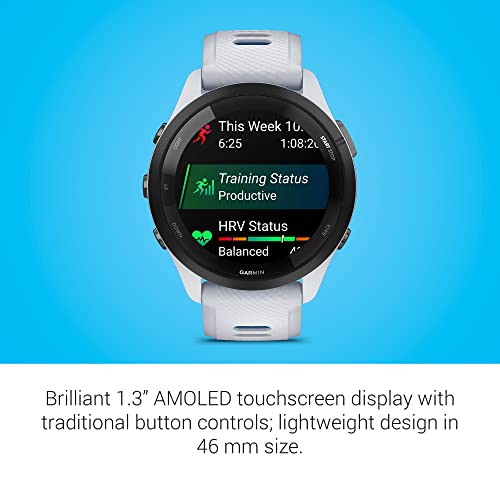
You’ll notice the Forerunner 265 is built to disappear on your wrist: 46 mm case, about 47 g — lightweight for long runs and 24/7 wear. The fēnix 7 Pro is larger and heavier (47 mm case, ~73 g) so it feels solid and secure during technical outings but more noticeable under sleeves.
Controls and straps
Both watches give you touchscreen plus physical buttons for reliable control in wet or cold conditions. The Forerunner’s softer case and quick-release silicone straps favor comfort. The fēnix uses reinforced materials and more premium bands (silicone, nylon, or leather/titanium options) for durability in harsh environments.
Displays and visibility
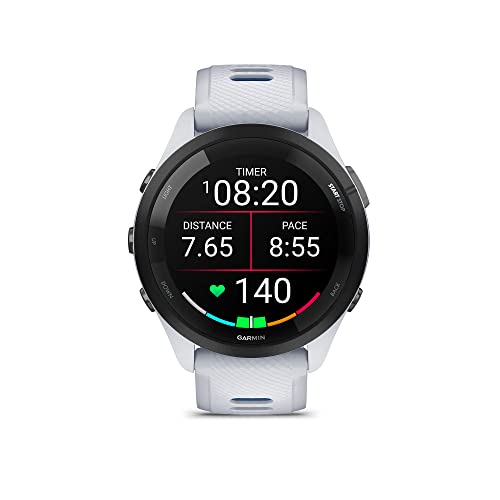
Forerunner 265: bright 1.3″ AMOLED — vivid colors, great in low light and city runs, but AMOLED draws more power.fēnix 7 Pro: 1.3″ Power Sapphire (solar) lens over a sunlight-optimized display — less punchy than AMOLED but far easier to read in direct sun and extends battery life via solar charging.


Rugged extras and water resistance
Key fēnix advantages: Power Sapphire scratch resistance, solar charging, titanium-reinforced bezel and a built-in LED flashlight for night navigation. Both watches are swim-capable and built to handle sweat and rain, but the fēnix is purpose-built for extended backcountry use where durability and runtime matter more.
- Forerunner 265: lightweight comfort, AMOLED clarity, better for daily wear.
- fēnix 7 Pro: rugged materials, solar + flashlight, optimized for long outdoor missions.
Training, Sensors & Battery: Metrics, Accuracy and Endurance
Core training toolkit
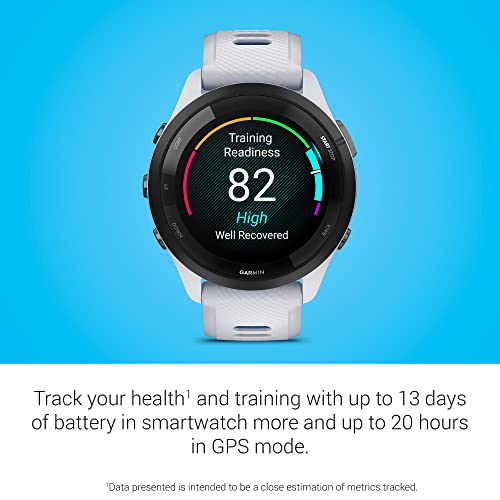
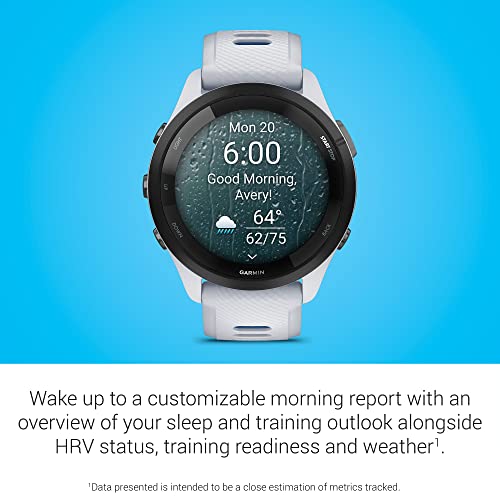
The Forerunner 265 is built around running: training readiness, HRV morning reports, daily suggested workouts, wrist-based running power and detailed running dynamics give you on-wrist guidance for race pacing and recovery. It’s a runner-first UI that keeps metrics accessible mid-workout.
Sensors and GPS accuracy
Both watches use multi-band GNSS with SatIQ for strong positional accuracy. Expect very close GPS performance on roads and trails; the fēnix 7 Pro’s beefier antenna and metal bezel help in extreme canyon or wooded conditions. Heart-rate accuracy is comparable for steady runs, but both benefit from a chest strap for high-intensity intervals or swim sessions. The fēnix adds full Pulse Ox, barometric altimeter and extra navigation sensors tuned for backcountry use.
Maps, connectivity and accessory support
The Forerunner connects to Garmin Connect, supports smart notifications and pairs with standard sensors. The fēnix 7 Pro expands that with preloaded TopoActive maps, larger storage for offline maps, and broader accessory compatibility (bike power meters, HRM-Pro, cadence sensors).


Real-world battery under GPS load
- Forerunner 265: ~20 hours in GPS mode — excellent for daily long runs and typical marathons.
- fēnix 7 Pro: substantially longer GPS runtime and solar-assisted extension; designed for ultras, multi-day routes and expedition modes.
Trade-off: the Forerunner puts richer runner-centric metrics on your wrist; the fēnix trades some screen punch for rugged sensors, maps and prolonged uptime when you’re off the grid.
Feature Comparison Chart
| Features | Forerunner 265 | fēnix 7 Pro |
|---|---|---|
| Approx. price | $$ | $$$ |
| Weight | 47 g (lightweight) | 73 g (heavier, rugged) |
| Display type | Color AMOLED touchscreen | Power Sapphire (MIP) with high durability |
| Screen size | 1.3 in | 1.3 in |
| Battery (Smartwatch) | Up to 13 days | Up to multiple weeks; solar extends runtime |
| Battery (GPS) | Up to 20 hours | Extended multi-day GPS modes; solar incremental gains |
| GPS & Positioning | Multi-band GNSS with SatIQ | Multi-band GNSS with SatIQ |
| Mapping | Route guidance via app; no full topo maps onboard | Preloaded TopoActive maps and downloadable regions |
| Solar charging | No | Yes — Power Sapphire solar lens |
| Build material | Lightweight polymer case, traditional bezel | Fiber-reinforced polymer case, titanium bezel & rear cover |
| Water rating | 5 ATM | 5 ATM |
| Storage | 8 GB | 32 GB |
| Sensors | Optical HR, HRV, Pulse Ox (region dependent), accelerometer | Optical HR, HRV, Pulse Ox (region dependent), baro altimeter, compass |
| Training features | Training readiness, race widget, suggested workouts, running power | Hill score, endurance score, training readiness, running power, advanced pacing |
| Navigation features | Breadcrumbs, GPS tracks, back-to-start | Turn-by-turn, Up Ahead prompts, ski/golf maps, topo navigation |
| Music storage | Limited / depends on SKU | Onboard music with larger storage (varies by model) |
| Ideal use | Focused runners and daily training | Multisport athletes and long-distance/backcountry explorers |
| MSRP | $$ | $$$ |
Which One Fits Your Training? Use Cases, Price and Practical Advice
Translate specs into who should buy which
If you’re primarily a runner who wants a lightweight watch, crisp AMOLED, and deep running analytics for tempo, recovery and race pacing, the Forerunner 265 is the better daily training partner. If you do multisport events, long trail ultras, backcountry navigation or need maximum battery and durability, the fēnix 7 Pro is built for that work.
Quick, practical contrasts
- Forerunner 265 — ~47 g, vibrant 1.3″ AMOLED, ~20 hours GPS, ~13 days smartwatch, ~$300. Best for road runners, daily wear, and focused training metrics.
- fēnix 7 Pro — ~73 g, Power Sapphire solar, weeks of battery (solar-extended), superior maps, built-in flashlight, ~$500. Best for multisport athletes, trail runners, and expeditions.
Comfort, ecosystem and long-term value
- Choose Forerunner if you value all-day comfort, lighter weight, and runner-first UX with essential sensors.
- Choose fēnix 7 Pro if you need topo maps, more storage, advanced navigation sensors, and near-unlimited runtime via solar charging.
Practical buying tips
- Try both on before buying: weight and bezel feel matter for long runs and sleep.
- Consider how often you’ll need offline maps, long GPS days, or the built-in torch — those justify the fēnix premium.
- If budget or wrist comfort is primary, pick the Forerunner 265; if capability and durability are the priority, invest in the fēnix 7 Pro.
Final Verdict: Pick by Priority
Winner: fēnix 7 Pro is best if you need rugged multisport hardware, superior battery life and solar-augmented endurance for long remote outings.
Choose Forerunner 265 for a lightweight runner-centric interface, vivid AMOLED and recovery insights for everyday training right now.
