

Accurate health tracking and marathon battery life — worth the $349.99 tradeoff?
Tired of smartwatches that die after a day and give you shaky health data? You want a watch that actually reads your heart, SpO2, and recovery reliably while staying readable outside and not needing daily charging — the Garmin Venu 3 Slate aims to fix that with a bright 1.4″ AMOLED, extensive sensors (HR, SpO2, HRV), and multi‑day battery life.
If you care more about accurate metrics and long runtime than a bloated app ecosystem, this watch is a strong contender. It delivers precise tracking, on‑device speaker/mic for quick calls, and robust fitness tools — but it comes at a premium and takes some setup to get the most from its advanced features.
Garmin Venu 3 45mm AMOLED Smartwatch

You get a compelling balance of precise health metrics, a vivid AMOLED screen, and long battery life that suits everyday wear and multi-day tracking. It’s a strong pick if you favor accuracy and battery longevity over an app-heavy ecosystem.
- Display & Readability – 9.2
- Battery Life & Efficiency – 9
- Health & Fitness Tracking – 9.4
- Smart Features & Connectivity – 8.3
Pros
- Bright, high-resolution 1.4″ AMOLED that’s easy to read
- Long multi-day battery life (up to ~14 days in light use)
- Extensive health sensors and accurate tracking (HR, SpO2, HRV)
- On-device speaker/mic for calls and quick voice interactions
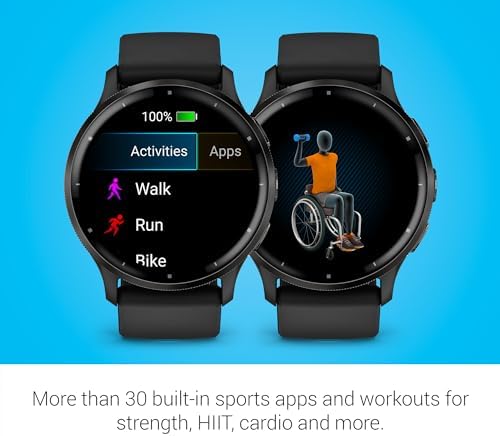
- Robust fitness features including animated workouts and recovery metrics
Cons
- Premium price compared with basic fitness bands
- Some advanced features require time to learn and configure
- Full smartwatch experience depends on phone pairing and OS
Quick overview
The Venu 3 Slate with a stainless steel bezel and 45mm case puts a high-quality 1.4-inch AMOLED display on your wrist while prioritizing health monitoring, long battery life, and reliable GPS. You’ll notice Garmin’s focus on accurate biometric sensors and thoughtful software tools intended to help you train smarter and recover better.
Key specifications at a glance
- Display: 1.4-inch AMOLED, 454 x 454 resolution
- Case: 45mm black case with slate stainless steel bezel
- Battery life: Up to ~14 days (varies by usage)
- Sensors: Wrist-based HR, Pulse Ox, HRV, accel., GPS
- Storage & extras: 8 GB music storage, built-in mic & speaker, Wi‑Fi, Bluetooth, Garmin Pay
Design and display
You’ll find the build balances dressy and durable: the stainless steel bezel adds a premium touch without being flashy, and the 45mm case sits comfortably for most wrists. The 1.4″ AMOLED delivers vivid colors and deep blacks that make data, watch faces, and animated workouts easy to follow indoors and surprisingly usable in daylight.
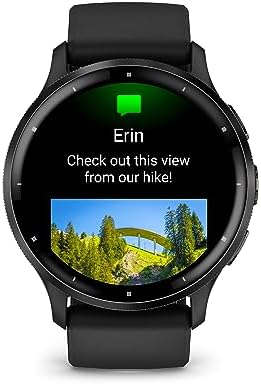

Touch responsiveness is smooth and the hybrid input (touchscreen + buttons) helps when you’re sweaty or wearing gloves. Strap swaps are straightforward; silicone bands are comfortable for workouts and sleep tracking.
Battery, performance, and daily use
Garmin’s power management is one of the watch’s standout traits. In light-use scenarios — basic activity tracking, occasional notifications, and disabled always-on display — you can expect multiple days of runtime. Heavy use (GPS workouts, music, phone calls) reduces that span but still outlasts many fully-loaded smartwatches.
| Usage mode | Typical battery life |
|---|---|
| Light daily tracking | ~10–14 days |
| Mixed use with notifications | ~6–9 days |
| GPS + music workouts | 8–20 hours |
Performance is steady: animations and menus are snappy, GPS locks quickly, and sensors respond reliably. If you enable constant on-screen features and intensive tracking, you’ll want to plan more frequent charging.
Health and fitness features
Garmin positions this model as an on-wrist coach. You’ll get an extensive toolkit for tracking and improving fitness:
- Wrist-based heart rate with alerts for abnormal readings
- Pulse Ox (SpO2) for on-demand and sleep measurements
- HRV status and Body Battery energy monitoring
- Sleep coaching, nap detection, and detailed sleep staging
- Over 30 built-in sports profiles and animated on-screen workouts
These tools are most useful when you pair them with consistent wear — the algorithms perform best with several days of data. Recovery time, training load, and workout benefit metrics are practical for runners and gym users who want actionable insight rather than raw numbers alone.

Smartwatch capabilities
You’ll find a respectable set of smart features: on-wrist calling when paired to your phone, basic voice replies via your phone’s assistant, onboard music storage, contactless payments (Garmin Pay where supported), and notification support. It’s not an app-store-heavy platform like some competitors, but the core interactions — messages, calls, music control, and contactless pay — are reliable and practical.
Who this is for
- You want battery life that lasts multiple days without daily charging
- You prioritize precise fitness and health data over a large third-party app catalog
- You want a polished AMOLED screen with a premium metal bezel finish
Final thoughts
If you want a wearable that treats health data seriously while still behaving as a capable smartwatch, this model is a strong candidate. You’ll trade some app ecosystem breadth for longer battery life, superior tracking accuracy, and a clearer focus on training and recovery metrics. Expect a short configuration period to tailor alerts and metrics to your needs, and then enjoy a dependable, long-running daily coach on your wrist.
FAQ
How long does the battery really last in everyday use?
Expect around 7–14 days depending on settings and usage. If you keep GPS, music, and an always-on display active, runtime drops into the single-digit days or hours for extended workout sessions. Switching off always-on display and limiting background connections will maximize uptime.
Is the GPS accurate enough for running and cycling routes?
Yes — the built-in GPS is reliable for route tracking and pace metrics. You’ll get tight tracks for most runs and rides; dense urban canyons or heavy tree cover can still introduce small deviations, which is typical for wrist-based GPS.
Can you answer calls directly from the watch?
Yes, the watch includes a speaker and microphone so you can take and make calls while it’s paired to your phone. Audio quality is fine for quick conversations, but extended calls will be better handled via your phone or earbuds.
How accurate are the health sensors compared to clinical devices?
Garmin uses proven optical sensors and algorithms that provide very consistent trends and good agreement with clinical devices for many users. However, wearable sensors aren’t medical-grade; for precise diagnostic needs you should rely on professional medical equipment and consult your clinician.
Does it support offline music and streaming?
Yes, you can store music on the watch and control playback. Streaming services depend on the provider and whether you sync playlists via the Garmin Connect app. Offline playback is useful for workouts when you don’t want to carry your phone.
Is the watch easy to customize for non-athletes?
Absolutely. You can tailor watch faces, choose which metrics appear on glance screens, and disable activity-specific alerts. Many everyday users keep things simple: step counts, sleep scores, and stress/Body Battery metrics provide useful daily feedback without needing advanced setup.
Will Garmin Pay and voice replies work in my country/phone?
Garmin Pay availability depends on your country and bank support; check Garmin’s compatibility list and your bank. Voice replies work via your phone’s assistant (Siri, Google Assistant, Bixby) when the phone is nearby and paired.
