
Which AMOLED will outshine your wrist: endurance titan, bezel classic, or budget marathoner?
AMOLED is not just pretty — it’s actionable. Punchy contrast makes heart-rate zones, maps, and recovery graphs instantly readable at a glance.
You want precision sensors, long runtime, and a screen that survives bright runs and late-night sleep tracking. This list cuts through marketing and gives you six practical AMOLED choices for 2025/26.
Top Picks


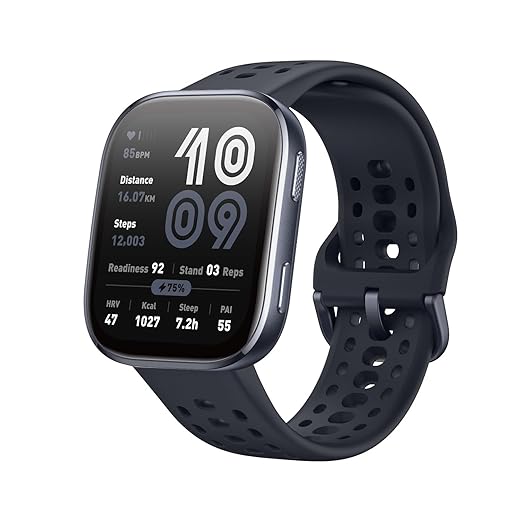

Garmin Venu 3 AMOLED Fitness Smartwatch
You get industry-leading battery life and very accurate GPS/health analytics designed for endurance training and recovery planning. The Venu 3 balances smartwatch conveniences with deep performance metrics, though the app ecosystem is more closed than Wear OS alternatives.
Pros
- Exceptional battery life (up to two weeks in typical use)
- Highly accurate GPS and body metrics (Body Battery, HRV status)
- Built-in speaker/mic for on-wrist calls and voice interactions
- Robust training features: animated workouts, recovery insights, multi-sport support
Cons
- App ecosystem and third-party integrations are more limited than Wear OS
- Larger case may not suit very small wrists
- Premium features and maps may require extra setup or purchase depending on region
Who the Venu 3 is built for
Garmin designed the Venu 3 for athletes and serious fitness users who value precise telemetry and multi-day autonomy. If you track structured training, recovery, and want reliable GPS for long sessions, this is one of the strongest AMOLED Garmin options.
Standout features and benefits
- 1.4" 454×454 AMOLED with long-lasting battery (up to ~14 days in typical configurations)
- Advanced health analytics: Body Battery energy monitoring, HRV status, sleep coach, and detailed recovery insights
- Built-in sports apps, animated workouts, and excellent GPS performance across satellite systems
These features mean you can go on long rides, multi-hour runs, or extended adventure outings without worrying about daily recharging, while still collecting precise training metrics.
Limitations and field notes
- Ecosystem: GarminOS is focused on fitness, so if you need the breadth of Wear OS apps or deep smartphone app interactivity, expect fewer options.
- Size and UI: the device is feature-rich and may require tuning notifications and widgets to fit your daily workflow.
In summary, you’ll appreciate the Venu 3 if training accuracy, battery endurance, and meaningful recovery insights are top priorities. It’s engineered to be a rugged, dependable on-wrist coach rather than a playground for third-party apps.
Google Pixel Watch 2 with Fitbit Integration
You get the tightest Fitbit health stack paired with native Google apps, delivering strong heart-rate and sleep tracking with intuitive safety features. The device balances software polish and useful integrations, though battery life remains a practical limiter for multi-day use.
Pros
- Best-in-class Fitbit sensor fusion for heart rate and sleep
- Seamless Google app integration and Wear OS ecosystem
- Safety features like Emergency SOS and Fall Detection
- Fast charging and responsive UI performance
Cons
- Battery typically lasts around one to two days depending on settings
- Smaller case options may feel cramped for heavy-screen users
- Some advanced analytics require Fitbit subscription
Design intent and target user
The Pixel Watch 2 is designed for users who want a compact Wear OS watch with first-class Fitbit health tracking. It’s for you if you value accurate HR metrics, sleep insight, Google app convenience, and safety features like Emergency SOS and Fall Detection.
Notable hardware and software advantages
- New sensor array for more precise HR, skin temperature, and stress signals
- 24+ hour battery with faster charging (about 75 minutes for a full day in many cases)
- Deep integration with Google services (Gmail, Maps, Wallet) and Fitbit analytics
That combination yields accurate activity detection, improved sleep staging, and practical on-wrist controls (music, calls, notifications). If you use Google Pixel devices, pairing is particularly seamless.
Practical considerations and workflow tips
- Battery: plan to charge daily or use short top-ups; disabling Always-On Display and limiting background sensors extends runtime.
- App dependence: many advanced Fitbit features are best with a Fitbit Premium subscription; evaluate which analytics you need before committing.
Overall, the Pixel Watch 2 is a great pick when you want modern Wear OS conveniences with Fitbit’s refined health monitoring. It’s a practical, everyday smartwatch that favors software experience and sensor fidelity over multi-day autonomy.
Samsung Galaxy Watch6 Classic 47mm Rotating Bezel
You get a large, tactile rotating bezel and a roomy AMOLED that makes navigation intuitive and glanceable. It delivers the same health stack and performance as Samsung's standard Watch6 but in a more classic, substantial case — at the cost of slightly heavier wrist presence and typical battery constraints.
Pros
- Rotating physical bezel for precise, non-touch navigation
- Large AMOLED display that’s excellent for readability
- Comprehensive health and fitness tracking (HR zones, ECG)
- Includes multiple band sizes and a classic aesthetic
Cons
- Battery life is modest — often a day to day-and-a-half
- Larger 47mm case can feel bulky for small wrists
- Renewed units may not include original packaging or accessories
Who should consider this Classic model
If you prefer a traditional watch feel with analog-style controls, the Classic 47mm model gives you a tactile rotating bezel that many power users prefer over swipe-heavy controls. It targets users who want premium design cues while keeping a modern smartwatch feature set.
Core strengths and practical benefits
- Rotating bezel for fast, accurate UI navigation without obscuring the screen
- Samsung’s health sensors: continuous HR, ECG, advanced sleep coaching, and personalized heart-rate zones
- Wear OS with One UI Watch for broad app compatibility and polished interactions
These strengths make it ideal when you want to glance at data quickly during workouts or meetings — the bezel reduces accidental screen taps and keeps navigation precise when sweaty or gloved.
Real-world trade-offs
- Battery: the larger screen and always-on options contribute to roughly 24–36 hours of real-world runtime, so nightly charging is common.
- Renewed condition: buyers should inspect seller refurbishment policies; strap comfort varies so budget for an aftermarket band if you prefer different materials.
In short, the Classic is a good fit if you value physical controls and a premium look. You get strong sensor fidelity and software polish, with the practical caveats of battery life and the renewed-product condition to consider.
Samsung Galaxy Watch6 (40mm) LTE Smartwatch
You get a polished Wear OS experience with bright AMOLED and comprehensive health sensors including ECG and blood-pressure monitoring. Performance is smooth and LTE keeps you connected standalone, but expect modest battery life and some variability with renewed units.
Pros
- Bright 1.3" Super AMOLED with high pixel density
- ECG and blood-pressure capable sensors for medical-grade readings
- Standalone LTE option for phone-free connectivity
- Smooth Wear OS + One UI Watch for app compatibility
Cons
- Battery typically lasts ~20–24 hours under normal use
- Refurbished units may vary in cosmetic condition and battery health
- Android-only compatibility limits cross-platform flexibility
What this watch is for
The 40mm Galaxy Watch6 in its LTE configuration is aimed at you if you want a feature-rich Android-first smartwatch that can act independently from your phone. It prioritizes health monitoring (ECG, continuous HR, BP notifications) and daily connectivity while offering a premium AMOLED display and snappy UI responsiveness.
Key features and how they benefit you
- 1.3" Super AMOLED, 432×432 (~453 ppi) for crisp readouts even outdoors
- ECG and blood-pressure monitoring, plus advanced sleep coaching and workout auto-detection
- Exynos W930 chipset with 2GB RAM and 16GB storage for responsive app use
These features let you monitor trends across workouts and sleep cycles, check clinical-style heart metrics for follow-ups with clinicians, and use LTE to stream music or answer calls without a tethered phone.
Practical insights and limitations
- Battery: expect around a single day of mixed usage with AOD or LTE active; you should plan daily top-ups or overnight charging. If you prioritize multi-day battery, this will be a limitation.
- Refurbished reality: units in this listing are renewed; performance is certified but cosmetic and battery wear vary. If you rely on long-term warranty support, verify seller policies.
Use-case examples and tips
- If you want to train without your phone, enable LTE and pair Bluetooth earbuds for phone-free audio during runs. Users report reliable GPS and workout detection across activities like yoga, weights, and swimming (IP68 rated).
- For healthcare tracking, keep sensors clean and wear snugly for better ECG/BP readings; share exported ECGs with clinicians for context.
Overall, you get a capable, connected watch that sits on the higher end of daily usefulness for Android users — trade-offs are mainly battery duration and refurbished-condition variability.
Amazfit Bip 6 1.97" AMOLED Long-Battery GPS
You get an impressively large 1.97" AMOLED and up to 14 days of battery in a lightweight package, plus accurate GPS and downloadable maps. It’s a great choice if you want long runtimes and solid fitness features at a lower price — expect fewer premium materials and a simpler app ecosystem.
Pros
- Very large 1.97" AMOLED display for excellent readability
- Up to 14-day battery life in typical use
- Built-in GPS with downloadable maps and fast satellite fix
- 140+ workout modes and AI coaching features
Cons
- Software and app ecosystem (Zepp OS) are less mature than Wear OS
- Build materials are more budget-oriented versus premium flagship watches
- Some advanced sensors and features may be less consistent than high-end competitors
Positioning and primary use
The Amazfit Bip 6 targets users who want the most runtime per dollar and a large, easy-to-read display. If you prefer fewer daily charges, extensive workout modes, and downloadable maps without a hefty price tag, the Bip 6 is built for that use case.
Core hardware and functionality
- 1.97" AMOLED with high readability and customizable watch faces
- 14-day battery life claim with typical mixed usage and optimized sensor sampling
- Built-in multi-system GNSS for accurate route tracking and free downloadable maps with turn-by-turn cues
These capabilities make it effective for weekend long runs, multi-hour hikes, or extended travel when charging options are limited. The inclusion of AI coaching and 140+ sport modes covers a broad set of training styles.
Practical limitations and hands-on tips
- Software: Zepp OS is improving but still lacks the depth and third-party app catalog of Wear OS or Garmin — expect a more closed, curated experience.
- Hardware: the aluminum case is lightweight and comfortable, but if you want premium metal finishes or sapphire glass you’ll need to look at higher-tier devices.
Tip: enable smart power modes and offload maps selectively to balance battery and navigation needs during long sessions. For a frugal, long-lasting daily wearable that still gives you robust fitness tracking, the Bip 6 is a compelling option.
Fitbit Sense 2 Health-first Smartwatch
You get an emphasis on stress detection, continuous health metrics, and a long battery life compared with many Wear OS alternatives. The Sense 2 is tuned for people who prioritize sleep analytics and stress tools, although many advanced features unlock with a subscription.
Pros
- Strong stress, sleep and ECG monitoring suite
- Long battery life (several days) compared to many competitors
- Comfortable, lightweight design with included S & L bands
- Integrated mindfulness and guided tools for stress management
Cons
- Full value requires Fitbit Premium subscription for advanced features
- Limited third-party apps compared with Wear OS platforms
- GPS and advanced features may reduce battery significantly when used
Why choose Sense 2
Sense 2 is aimed at users who treat a smartwatch as a health-centric companion rather than a general-purpose mini-phone. If you prioritize stress management, sleep profiling, and continuous biometrics, the Sense 2 provides a focused suite of tools and a comfortable daily wear experience.
Health and sensor capabilities
- Continuous HR monitoring, ECG app, SpO2 tracking, and cEDA-based stress detection
- Personalized Sleep Profile, Sleep Score, Smart Wake, and Daily Readiness Score to guide training intensity
- Built-in GPS for outdoor workouts and 40+ exercise modes
These tools let you correlate stress scores, sleep quality, and activity load to make informed recovery choices or share concise reports with clinicians for context.
Practical trade-offs and user workflow
- Subscription model: several of the more advanced analytics and guided programs require Fitbit Premium after the initial trial — budget for ongoing costs if you want the full analytics stack.
- Battery management: you’ll get multi-day runtimes in passive use, but continuous GPS, SpO2 sampling, or heavy workout recording will shorten that considerably.
In practice, Sense 2 is a solid health-first wearable that rewards disciplined users who leverage its metrics to improve sleep and stress resilience. It’s less about app variety and more about reliable biometric feedback and action-oriented guidance.
Final Thoughts
Pick the Garmin Venu 3 if you train seriously. It combines industry-leading battery life with top-tier GPS and detailed health analytics — ideal for long runs, multi-hour rides, and structured recovery planning. Buy the Venu 3 when you need multi-day runtime, reliable route tracking, and metrics you can actually use to plan sessions.
Choose the Google Pixel Watch 2 if you want the best Fitbit + Wear OS blend. It delivers the tightest Fitbit health stack with native Google apps and useful safety features, making it the most complete daily smartwatch for Android users who value polished software and seamless integrations. Expect to charge more often, but gain the strongest app and ecosystem experience for everyday life and sleep/HR monitoring.
